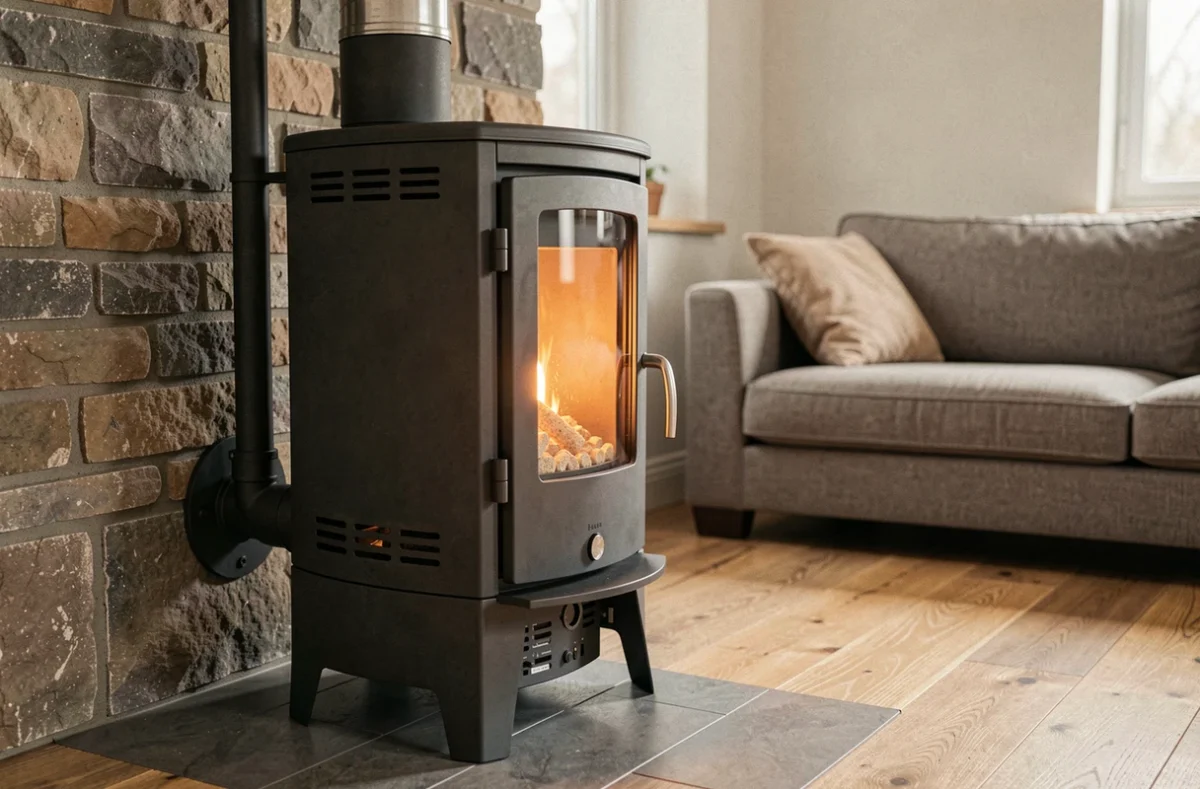
A properly installed and maintained pellet stove produces very little carbon monoxide. Problems arise when one link in the combustion chain fails: insufficient air supply, a partially blocked flue, a deteriorated combustion chamber seal, or poor-quality pellets. Understanding where and why CO forms in this type of appliance makes it possible to address the causes rather than the symptoms.
Air-to-fuel ratio and CO production in a pellet stove
Carbon monoxide formation in a pellet stove depends directly on the ratio between the available oxygen and the amount of fuel being burned. When this ratio falls below the appropriate threshold, combustion becomes incomplete: the carbon in the pellets oxidizes to CO instead of CO2.
Three components control this balance in the appliance: the combustion air fan, the auger that meters the pellet supply, and the electronic control board that synchronizes the two. A dirty fan reduces airflow without the auger compensating, creating an excess of fuel relative to the available oxygen.
An article detailing the carbon monoxide risks of a pellet stove explains this incomplete combustion mechanism and its effects on indoor air quality.
Door and combustion chamber seals also play an underestimated role. A seal that no longer ensures an airtight fit alters airflow in the firebox. Uncontrolled air enters through unintended points, destabilizing the flame and encouraging CO production, even when the fan is working normally.
CO emissions from stored wood pellets
The risk of carbon monoxide is not limited to the stove while it is operating. Pellets themselves emit CO during storage through the auto-oxidation of fatty acids and resins in the wood. This process occurs without combustion, at room temperature.
A fatal accident in the hold of a ship carrying pellets highlighted this risk in 2002, according to INRS. In an enclosed space, CO released by a large volume of pellets can reach dangerous concentrations even when no heating appliance is involved.
For homeowners, the risk mainly concerns bulk storage silos installed in enclosed spaces (cellars, unventilated garages, utility rooms). Fifteen-kilogram bags stored in a ventilated area do not pose the same problem, as the volume of pellets is too small to cause a significant buildup of CO.
Precautions for an indoor pellet silo
- Ventilate the storage area with a low-level air inlet and a high-level outlet, sized to ensure continuous air exchange
- Never enter a silo or enclosed storage area without first measuring the CO concentration, especially after it has been closed for an extended period
- Avoid storing pellets in a room adjoining a living space unless there is an airtight partition and independent ventilation
Flue: the critical point in the installation
A partially blocked flue is the leading cause of CO poisoning involving a wood-burning heating appliance. Soot, creosote, a bird’s nest, or a deformed liner: any obstruction to the draft can force combustion gases back into the home instead of venting them through the roof.
Regulatory chimney sweeping (twice a year, including once during the heating season, under current regulations) is not always enough to detect a flue liner defect. We recommend having a qualified professional inspect the inside of the flue during the annual service, in addition to routine mechanical sweeping.
Pay particular attention to the airtightness of the connections between the stove and the flue. A deteriorated connector seal or a loose-fitting joint can allow CO to leak directly into the room, where concentrations are highest because the flue gases have not yet been diluted by the draft.
Checks to perform during an annual service
- Condition of the door, glass, and combustion chamber seals (replace them as soon as they become flattened or brittle)
- Cleanliness of the exhaust fan and the entire length of the flue
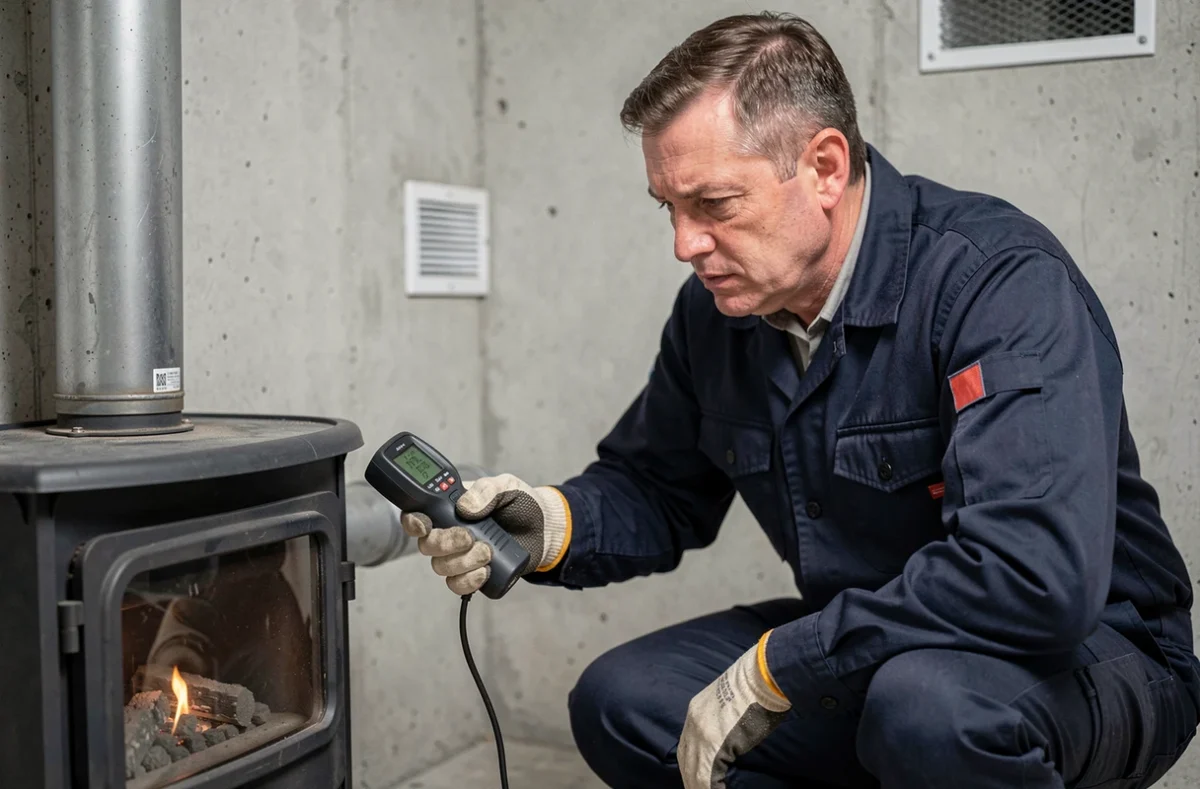
- Check the draft with a draft gauge to confirm that the negative pressure meets the manufacturer’s specifications
- Visually inspect the flue liner for cracks, corrosion, or loose joints
Carbon monoxide detector: choosing and positioning one
A CO detector does not prevent poisoning; it alerts you to it. It is a safety net, not a source-level prevention measure. This distinction matters: maintaining the appliance and flue remains the first line of defense.
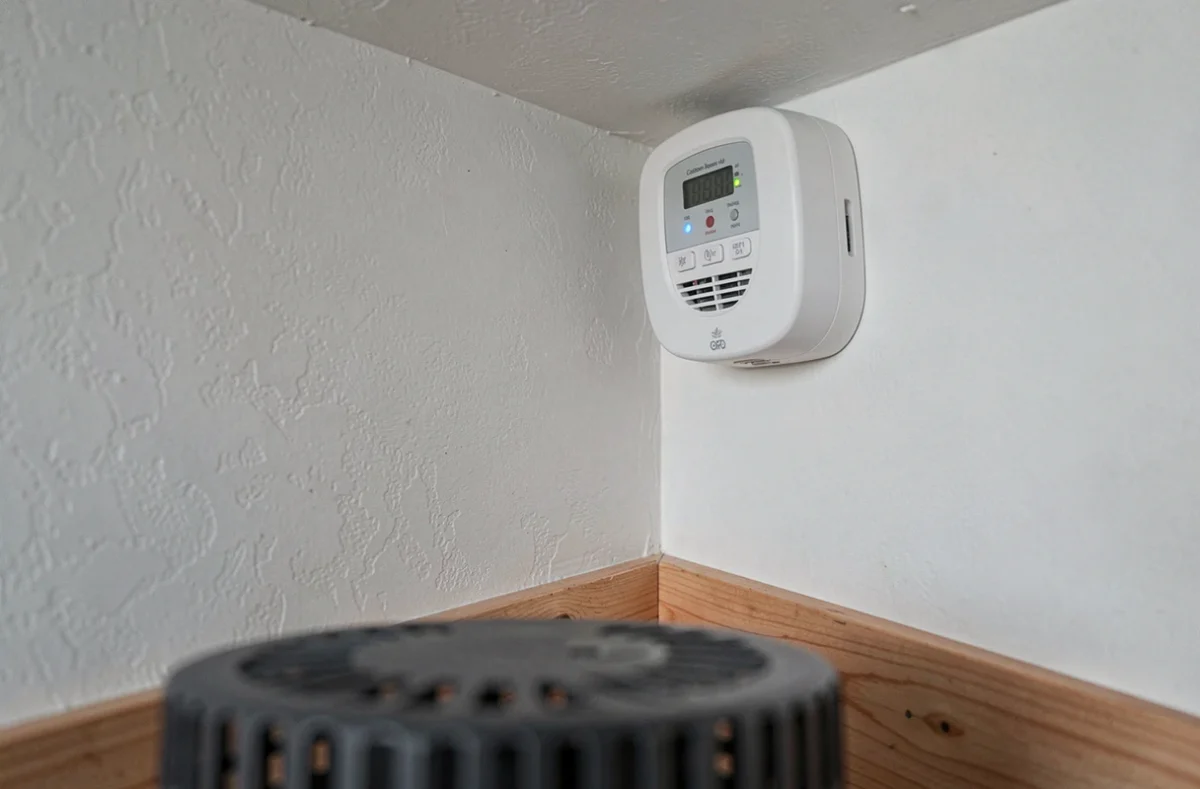
For a pellet stove, place the detector in the same room as the appliance, at breathing height (between 1 m and 1.50 m above the floor) and away from the stove (at least 1.50 m) to prevent false alarms during ignition. A second detector in the hallway leading to the bedrooms adds protection at night.
Electrochemical detectors are the only type suitable for household CO detection. They are different from smoke detectors (required in homes) and combustible gas detectors. A smoke detector does not detect carbon monoxide, and vice versa. The two devices complement each other.
An electrochemical cell has a limited lifespan (usually stated by the manufacturer on the device). An expired detector gives a false sense of security. Checking the replacement date and testing the device every month using the built-in test button are the only ways to ensure it is working properly.
Carbon monoxide remains a manageable risk with a pellet stove. It comes down to three technical priorities: maintain the air-to-fuel ratio through regular appliance maintenance, ensure smoke is vented through a flue in good condition, and properly ventilate the pellet storage area. A CO detector is a last resort, not the first.