
An electrical project signed in March, delivered in December: in the meantime, copper prices have fluctuated, wages have been adjusted, and the initial margin has evaporated. This is exactly the scenario that the BT47 index published by INSEE helps to avoid, provided one knows how to integrate it into their contractual documents and does not make mistakes in the calculation mechanics.
Composition of the BT47: what the index really measures in electricity
The BT47 corresponds to NAF activity 43.21A, which means electrical installation work in buildings. It aggregates three cost categories: labor, materials and electrical equipment, and energy. INSEE publishes it monthly based on 2010.
The structure of the index can evolve over time. INSEE periodically recalculates the weights without retroactively modifying previous values. In practice, this means that a contract covering a long period may rely on two successive index structures. If one compares values on either side of a methodological break without knowing it, the revision calculation is skewed. It is necessary to check in the notice published in the Official Journal the detailed composition applicable to the relevant period.
Another point to keep in mind: the published values may be provisional. INSEE specifies this in its recent publications. A company that establishes a work situation based on the latest available index must anticipate a possible adjustment if the contract provides for it.
To correctly calculate the BT47 INSEE index, one starts by identifying the reference value (that of the zero month of the market) and the current value (that of the month of execution of the work), then applies the contractual formula.

Price revision formula with the BT47: mechanics and common errors
The typical formula looks like this: P = P0 × (current BT47 / reference BT47). P0 is the initial price, reference BT47 corresponds to the index value at the date the price was established (or at the date set in the contract), and current BT47 is the value for the month of execution.
The chosen reference date directly impacts the margin. Let’s take a simplified example: if the reference value is from January and the work is executed in September, the ratio reflects the increase over eight months. If an older reference date had been chosen, the ratio would have been more favorable to the contractor, but also more contestable for the project owner.
Two errors frequently occur:
- Confusing adjustment and revision. Adjustment modifies the price between the submission of the offer and the start of execution. Revision occurs during execution. Both can coexist in the same contract, but they do not apply to the same periods or with the same indices.
- Using an index based on 2021 to compare with the BT47. Since June 2024, INSEE has switched some production cost indices to a 2021 base, but the BT47 remains published on a 2010 base. Mixing the two without conversion amounts to comparing incompatible quantities.
- Forgetting the fixed portion. Some contracts include a non-revisable portion in the formula (often noted as “a”). If this fixed portion is high, the revision only compensates for a fraction of the actual cost increase.
BT47 contractual clause: what makes the price truly revisable
One can memorize the formula and consult INSEE every month: without a revision clause in the contract, the BT47 index changes nothing. This point is often underestimated in private contracts, where the drafting of estimates is less regulated than in public contracts.
For a price to be revisable, the contract must explicitly mention three elements:
- The chosen reference index (here the BT47, as referenced on the INSEE website).
- The complete calculation formula, including any fixed portion and rounding methods.
- The frequency and conditions for triggering (monthly, quarterly, at each work situation).
In the absence of any of these elements, the contractor has no legal leverage to adjust their price, even if the index has significantly increased. In private contracts, it is the drafting of the estimate or contract that prevails.
Recent evolution of the BT47 and operational reading of INSEE publications
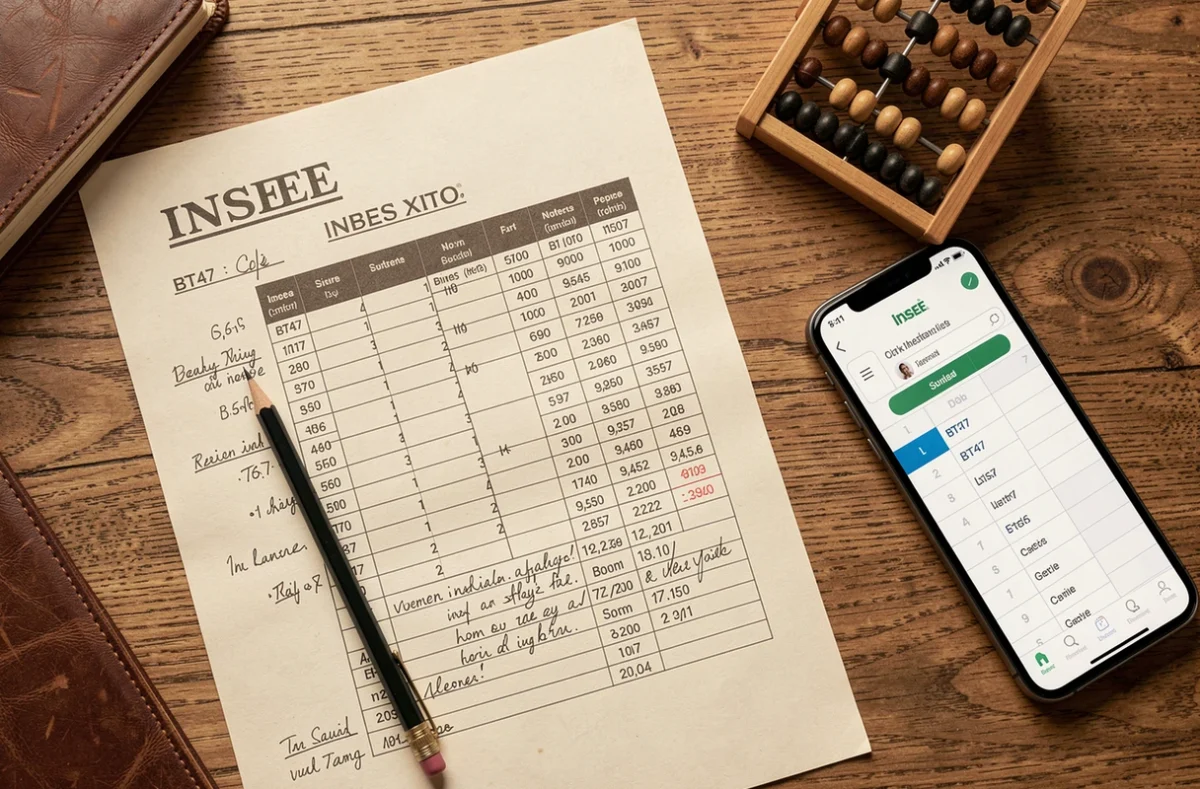
The latest publications from INSEE show that the BT47 has increased between June and August 2026, with a more sustained pace between June and July than between July and August. This deceleration illustrates a practical point: projecting a linear increase to anticipate the cost of a future project leads to inaccurate estimates.
We always use the published values, never projections. If the value for the relevant month is not yet available, we wait for the publication or temporarily apply the last known value, with subsequent adjustment if the contract provides for it.
Where to find the BT47 value
The complete time series is accessible on the INSEE website. The Batirama site also publishes the values. One should always check the publication date to ensure that the value is definitive or provisional.
A well-drafted contract, a formula suited to the electrical lot, and a rigorous reading of INSEE publications are sufficient to protect margins over the duration of a project. The BT47 is not a complex tool, but every detail matters: calculation base, reference date, fixed portion, provisional nature of values. Neglecting any of these parameters means leaving the margin to chance.