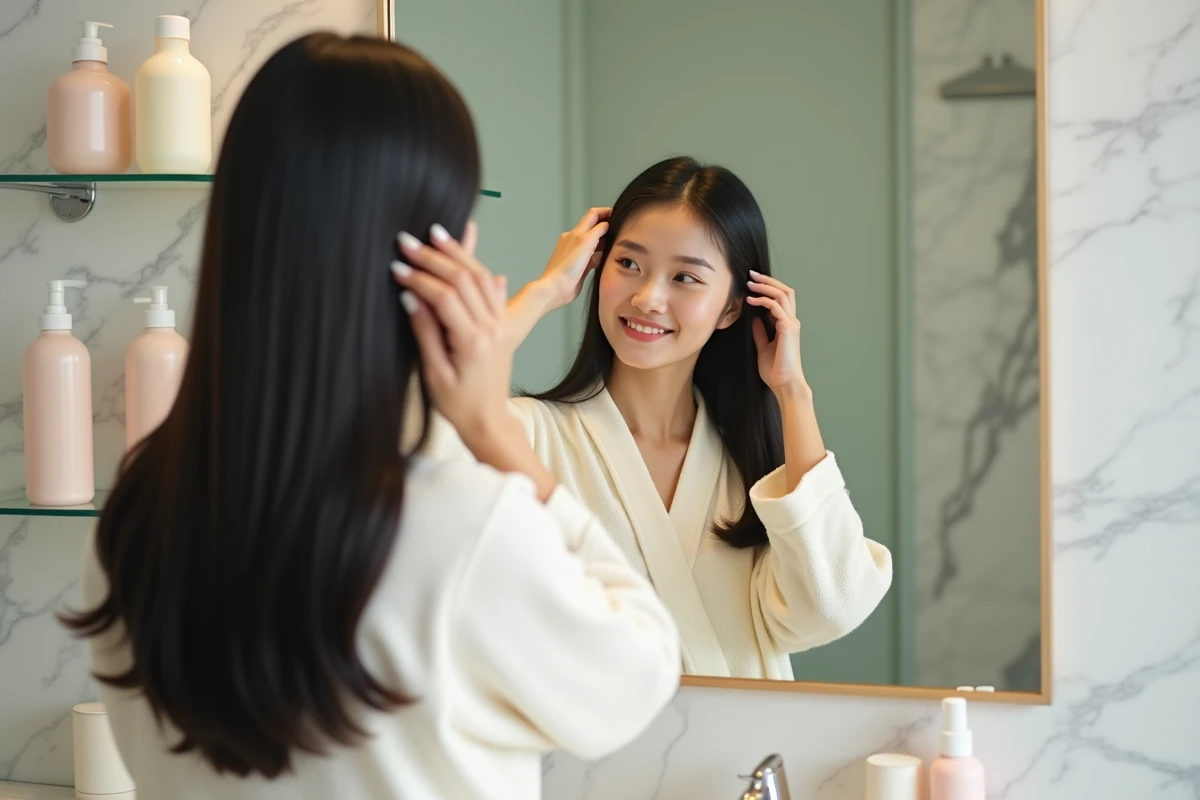
When you run your hand through hair treated with Korean hair care products, the first thing that strikes you is the texture. Not a plasticky look or weighed down by silicone, but a soft fiber, smooth to the touch, with a natural shine. Korean hair fascinates because it seems to combine shine and lightness without compromise. Behind this result is a very different approach to hair care compared to our French habits.
Scalp Microbiome: The True Starting Point of the Korean Routine
In France, we often start by treating the lengths (masks, serums, oils). The Korean logic reverses the priority: scalp care precedes fiber care. The idea is simple: a healthy scalp produces stronger and shinier hair from the root.
For several years now, several Korean haircare brands have formulated their shampoos around protecting the microbiome. We find sulfate-free surfactants, a deliberately low pH, and pre- or probiotics. This approach, already well established in Korean skincare for the face, has extended to hair care with the same rigor.
In practical terms, you can learn everything about Korean hair by observing this foundational principle: never aggress the scalp to avoid compromising the quality of the hair that grows.
Korean scalp scrubs illustrate this philosophy well. Rather than stripping, they gently exfoliate to eliminate styling product residues and excess sebum, without disturbing the skin flora. Feedback on this point varies depending on the type of scalp, but the basic principle remains relevant for the majority of profiles.
Korean Hair Care Routine: Layering Applied to Hair
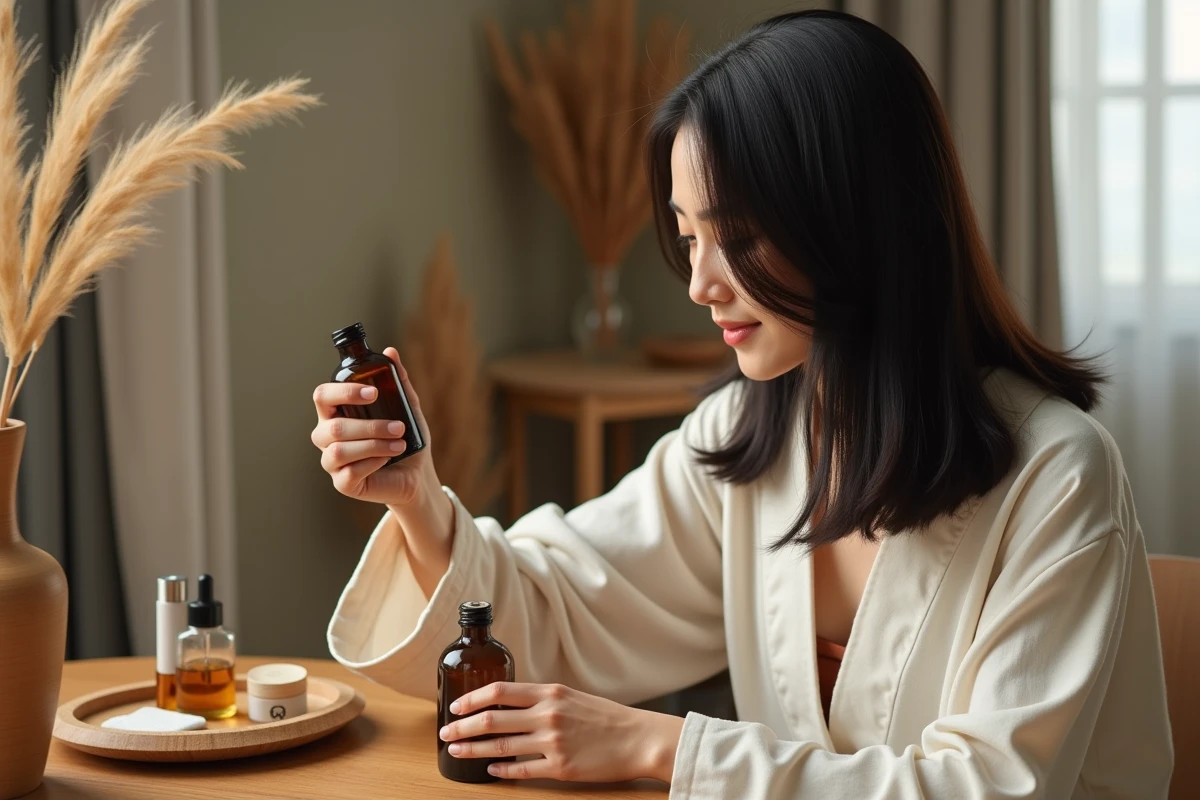
The layering (superimposing fine treatments) that Korean women practice on their faces is also adapted for hair. We are not talking about five products stacked randomly, but a sequence designed so that each layer reinforces the previous one.
The Concrete Steps of a Typical Routine
- A pre-treatment or scalp scrub, applied before shampooing to prepare the ground and promote the absorption of the following active ingredients
- A gentle pH shampoo, free from harsh sulfates, that cleanses without stripping the fiber or the hydrolipidic film of the scalp
- A conditioner or a mask targeted at the lengths, often formulated with fermented ingredients (rice, soy) that provide shine without weighing down
- A serum or hair essence as a finishing touch, applied to damp hair, that seals in moisture and gives that characteristic “glass hair” effect
Each step targets a specific area: scalp, mid-lengths, or ends. The same product is not applied everywhere. This segmentation largely explains why the result appears so homogeneous; the fiber receives exactly what it needs, no more, no less.
Rinsing: An Underestimated Step
Rinsing with cold or lukewarm water at the end of the routine is a gesture that many Korean women consider non-negotiable. Cool water closes the scales of the hair fiber, which mechanically increases light reflection. A well-executed cold rinse produces more shine than a poorly chosen serum.
There is also the use of acidic rinses (vinegar water, fermented rice water) that lower the pH of the fiber and further enhance this natural shine.
Korean Straightening in Salons: An Alternative to Brazilian for Shine
Hairdressers in France now offer Korean straightening services, sometimes marketed under names like “GIWON K-Beauty.” The principle differs from Brazilian or Japanese straightening in one specific point: the result remains adjustable.
You do not achieve a stiff straightness. The hair retains movement, a natural fall, but with a smoothed surface that reflects light uniformly. It is this contrast between flexibility and shine that attracts more and more clients to salons.
Some French institutes also integrate Korean care protocols in addition to haircuts: nourishing “hair botox” or premium masks applied at the basin, directly inspired by the rituals practiced in salons in Seoul. The goal remains the same: to nourish the fiber deeply so that the shine lasts between visits.
Korean Hair Products: What Makes the Difference in Formulations
Korean beauty stands out for its choice of active ingredients. Fermented ingredients, botanical extracts, and lightweight formulas that prioritize hydration without a greasy film are frequently found.
- Fermented rice essences strengthen the elasticity of the fiber and provide visible shine from the first use
- Raspberry or pomegranate vinegar is used as an acidic rinsing agent to smooth the cuticles
- Camellia-based serums, a classic in Korean beauty, protect the ends without a cardboard effect
Korean formulations focus on watery textures rather than greasy ones. This is a fundamental difference from Western products that often rely on heavy butters and oils. The result: shiny hair that does not fall flat under the weight of the product.
This lightness of texture also explains why the Korean routine works on both fine and thick hair. The hair fiber absorbs the treatment without being overloaded, which maintains volume while gaining softness.
The common thread of all these practices, from scalp scrubs to finishing serums, lies in an obsession with the health of the fiber before immediate appearance. Korean hair care does not seek to mask a problem with a temporary shiny film. They work on the structure of the hair over time. It is this logic of foundational care, applied regularly, that produces the softness and shine associated with Korean hair.