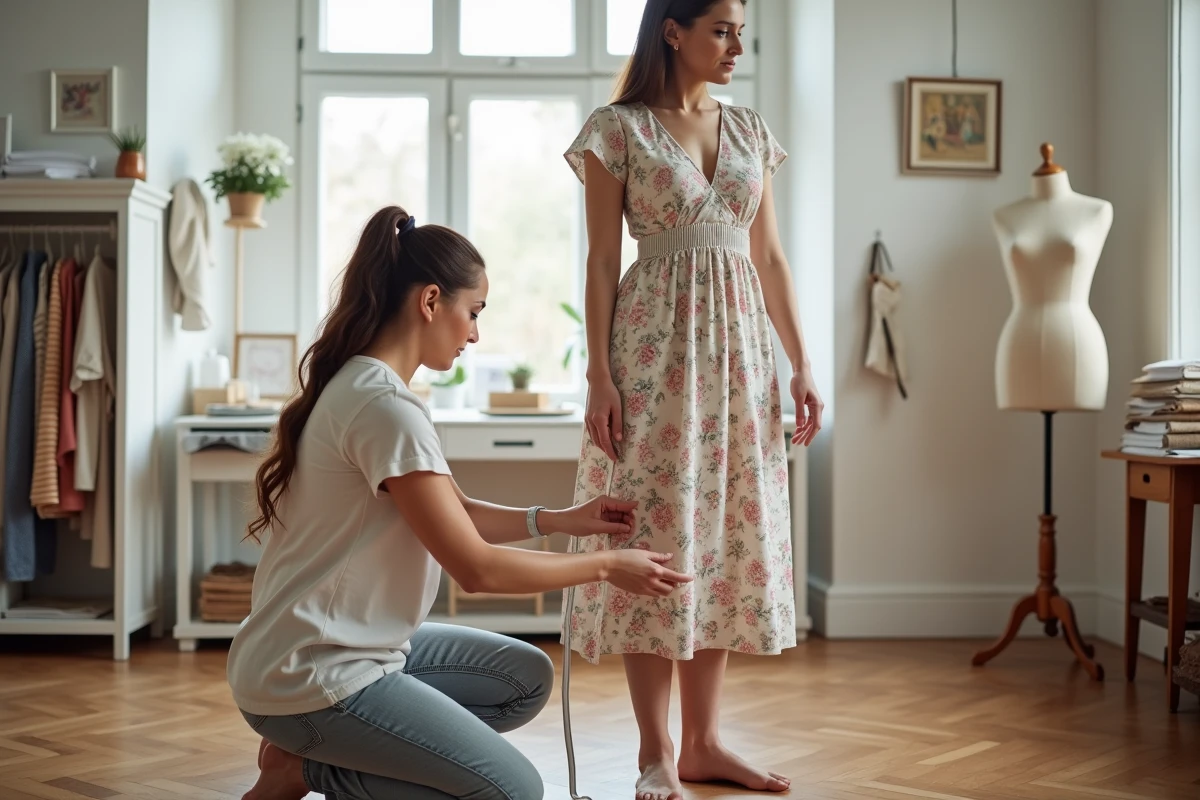
An online purchased dress that gapes at the bust or stops too high on the calf is often a problem of incorrect measurements taken at the start. The measuring tape, posture, starting point on the body: every detail matters to achieve the perfect length of a dress. This guide details concrete actions, common pitfalls, and adjustments related to your body shape.
Waist-hip ratio and perceived length of a dress
Have you ever noticed that the same midi dress looks shorter on certain silhouettes? It’s not an illusion. The volume of the hips alters how the fabric falls and, consequently, the visible length of the hem.
On a person with a well-defined waist and wide hips, the fabric stretches over the curves before falling. The hem visually rises by several centimeters compared to a more straight-lined silhouette. Recent resources in image consulting recommend adjusting the target length based on the waist-hip ratio, and not just height.
Specifically, if your hips are significantly wider than your waist, add a few centimeters to the measured length before confirming an order or cutting a pattern. This is a reflex that standard size guides rarely mention, but it avoids many disappointments. To properly take the measurements of a dress, you must consider the overall body shape, not just the raw numbers.

Measuring the length of a dress: starting points based on the cut
The length of a dress is not always measured from the same point. The starting point depends on the cut, and getting this wrong skews everything else.
Empire waist or high waist dress
The starting point is just under the bust, where the waist seam is positioned. Place the measuring tape at this point and let it drop straight down to the desired hem point. Never pull on the tape: it should follow the curve of the body without tension.
Straight or fitted dress at the natural waist
Measure from the natural waist, which is the dip above the hip bones (not the waistband of the pants, which is often lower). To locate this point, lean to the side: the crease that forms indicates your natural waist.
Shoulder-hem dress
For a one-piece dress without a marked waist seam, the measurement goes from the top of the shoulder (at the junction with the neck) down to the desired bottom. This shoulder-hem measurement is the most reliable for fluid dresses that do not cinch at the waist.
Professional sellers use dedicated sheets for each type of dress (straight, midi, maxi, empire) with precise measurement points: shoulder-hem, waist-hem, bust-waist. Adopting this logic by cut avoids comparing lengths that do not measure the same thing.
Conditions for taking measurements for reliable results
The act of measuring seems simple. Errors rarely come from the act itself, but from the conditions under which it is done.
- Wear fitted clothing (leggings, form-fitting t-shirt) and a thin bra that offers good support, even if you do not plan to wear one with the dress. The volume of the undergarment alters the bust measurement and thus the overall fall.
- Stand straight, feet together, arms along the body. Any shifted posture (one foot forward, shoulders hunched) skews the measurement by several centimeters.
- Get help. Measuring alone forces you to lean to read the tape, which alters your posture and thus the measurement. A second pair of eyes eliminates this bias.
- Take your measurements in the evening rather than in the morning: the body is slightly more relaxed and the measurements better reflect your body shape in real conditions.
Bust, waist, hip measurements: the trio not to overlook
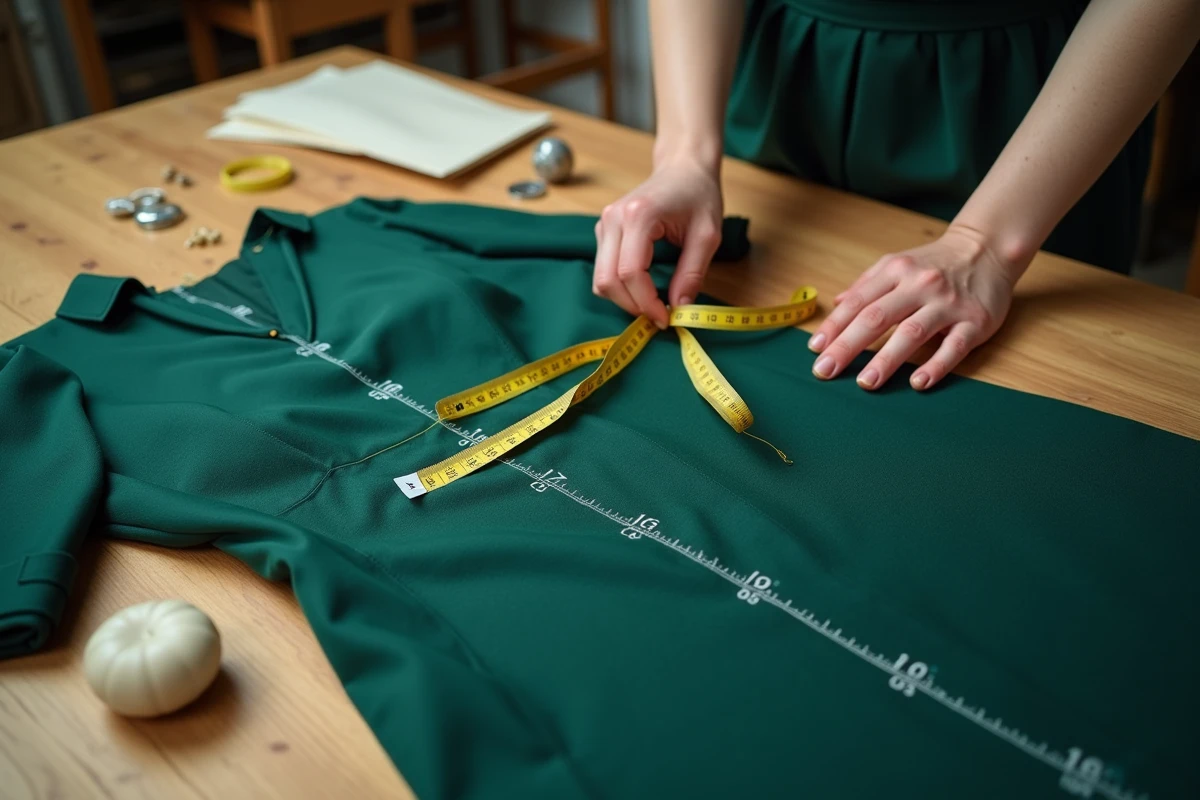
The perfect length of a dress also depends on the accuracy of the three horizontal measurements. If the bust measurement is underestimated, the dress pulls up at the bust and visually shortens the front.
The bust measurement is taken at the fullest point, passing the measuring tape under the armpits and over the tips of the breasts. The tape should remain horizontal at the back. For the waist measurement, return to the natural dip identified earlier. For the hip measurement, measure at the widest point (often at the level of the buttocks), keeping the tape perfectly horizontal.
Do not tighten the tape. It should be able to slide over the skin without falling. If you can fit a finger between the tape and your body, the tension is correct.
What if you are between two sizes?
In most cases, choosing the larger size and then having it altered is safer than taking the smaller size hoping that the fabric will stretch. A few centimeters alteration in length costs little and preserves the proportions of the garment.
Adjusting the length to the expected heel height
A long dress tried on barefoot and worn with several centimeters of heels will not fall the same way. The difference in height alters the hemline, especially on fluid or flared dresses.
Take your length measurements while wearing the shoes you plan to use with the dress. If you are still unsure about the pair, add the estimated heel height to your barefoot measurement. It is the “shod” length that matters, not the barefoot length.
For a formal or evening dress, plan to take measurements with the final shoes. Adjusting a long dress that has already been hemmed requires detaching the hem, which sometimes leaves a visible mark on certain fabrics.
The perfect length of a dress does not exist in absolute terms. It depends on your body shape, the cut of the garment, and the shoes worn. Three measurements taken under good conditions, with the correct starting point according to the cut, are enough to eliminate the vast majority of unpleasant surprises.