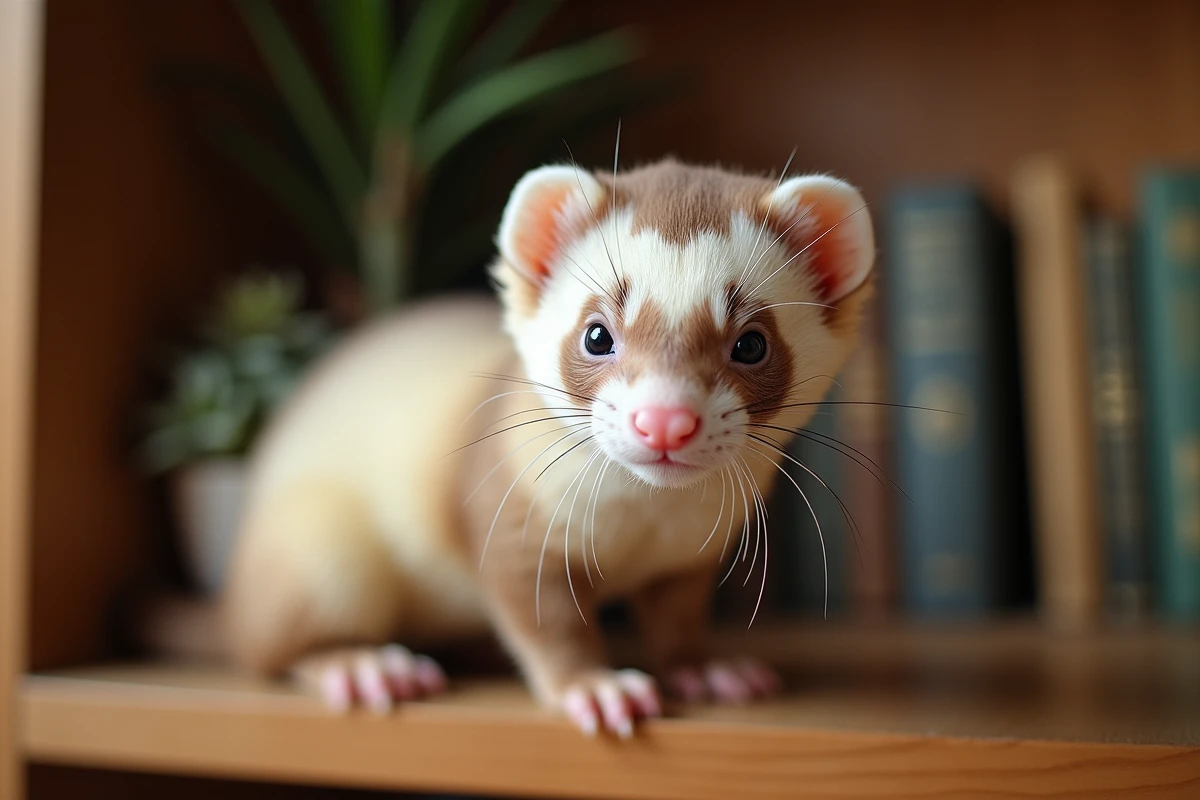
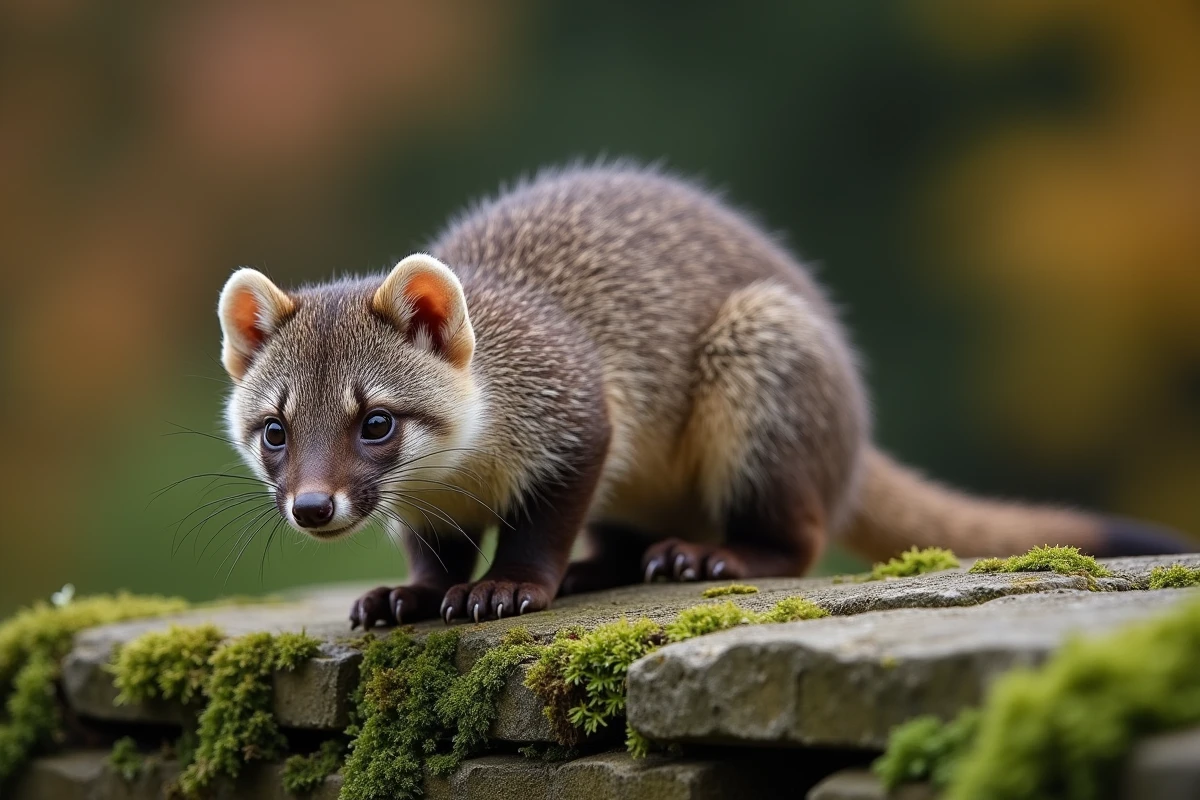
The stone marten and the ferret look so similar that many people confuse them. They have the same elongated silhouette, the same pointed snout, and belong to the same family of mustelids. The comparison ends there: one is a wild animal protected by law, while the other has lived in our homes for centuries. Before deciding on one or the other, this distinction changes everything.
Keeping a stone marten in France: what the regulations say
Have you found an injured stone marten in your garden and are considering keeping it? French law does not allow this. The stone marten (Martes foina) is a wild animal governed by the Environmental Code. Its possession by a private individual is treated the same as that of non-domestic species.
In practical terms, keeping a stone marten at home requires a certificate of capacity and an establishment opening authorization. These documents are issued to specialized organizations (rehabilitation centers, animal parks), not to individuals looking for a couch companion.
The ferret (Mustela putorius furo), on the other hand, is listed among the domestic species established by the decree of August 11, 2006 (JORF of August 24, 2006). A private individual can adopt one without any particular administrative formalities, except in cases of breeding or commercial activity. To better understand the issue of the domestic stone marten as a pet, this difference in legal status is the first filter to apply.
The ferret is the only mustelid legally adoptable by a private individual in France. The rest of this article focuses on what makes the ferret endearing, demanding, and sometimes puzzling.
Ferret behavior on a daily basis: an animal neither cat nor dog
Adopting a ferret while expecting it to have the habits of a cat or a dog leads to quick disappointments. The ferret has its own behavioral register, and understanding it avoids many frustrations.
Activity and sleep phases
The ferret sleeps between fourteen and eighteen hours a day. During its waking phases, it becomes a bundle of energy. It explores, digs, climbs, steals objects, and hides them. This contrast between deep lethargy and sudden hyperactivity often surprises new owners.
Its activity periods partially adapt to the household’s rhythm. A ferret stimulated in the morning and evening will gradually align its waking times with these slots.
Socialization and interactions
The ferret is a social animal. A lone ferret gets bored and may develop behavioral issues (apathy, self-mutilation, aggression). Adopting two ferrets instead of one significantly reduces this risk, provided they are gradually accustomed to each other.
With humans, the ferret seeks physical contact. It licks, nibbles, and climbs on shoulders. Nibbling is not aggression: it is its natural mode of interaction. Training involves teaching it the limit between play and hard biting from the very first weeks.
Ferret habitat and diet: the practical constraints
Do you have an apartment or a house? The ferret adapts to both, provided certain non-negotiable rules are followed.
Living space: cage or supervised freedom
The cage serves as a refuge and resting place, not a permanent prison. A ferret needs several hours of daily outing in a secure space. Securing means:
- Blocking every opening larger than a few centimeters (the ferret can slip into very tight spaces thanks to its flexible, elongated body)
- Removing rubber, foam, or soft plastic objects it might ingest, which can cause intestinal blockages
- Protecting electrical cables, as the ferret chews on everything it finds
- Closing access to machines (washing machine, dryer) where it can slip in unnoticed
The cage itself must offer several levels, a hammock, a litter box, and a water point. A space that is too small generates stress.
Diet: strict carnivore
The ferret is a strict carnivore with a very short intestinal transit. Its food must contain a high proportion of animal proteins and fats. High-quality cat kibble (rich in animal proteins, low in grains) is a common option. Some owners opt for the BARF diet (raw meat, meaty bones, offal), which is closer to its natural diet.
Fruits, vegetables, and grains should be avoided. The ferret’s digestive system does not properly assimilate them, and an excess of carbohydrates promotes insulinoma, a common pancreatic tumor in this species.

Ferret health: vaccines and diseases to watch for
The ferret requires specific veterinary follow-up. Not all veterinarians practice exotic pet medicine (NAC): checking the practitioner’s specialization before adoption avoids unnecessary trips.
Two vaccinations are recommended: against distemper (fatal in ferrets) and against rabies (mandatory for traveling within the European Union). Spaying or neutering is highly recommended, especially for females. An unspayed female ferret that is not mated remains in prolonged heat, which can lead to potentially fatal aplastic anemia.
The most monitored pathologies in ferrets are insulinoma, adrenal disease, and lymphoma. These conditions often appear after the age of three. An annual blood test allows for early detection.
Stone marten and ferret: two animals, two incomparable realities
The stone marten remains a wild, nocturnal, solitary, territorial animal. Even if raised young, it retains instincts incompatible with domestic life: intensive urine marking, aggression at sexual maturity, need for a large territory. Rehabilitation centers that take in illegally held stone martens regularly observe serious behavioral issues related to captivity.
The ferret, domesticated for over two thousand years, has been selected for cohabitation with humans. Its social behavior and adaptability make it the only viable mustelid as a companion. It requires time, space, a significant veterinary budget, and true availability, but it rewards this with interactions, play, and companionship.
The choice between stone marten and ferret is not a choice at all. The regulations decide before even considering compatibility. For those wishing to share their daily life with a mustelid, the ferret remains the only legal and realistic option in France.