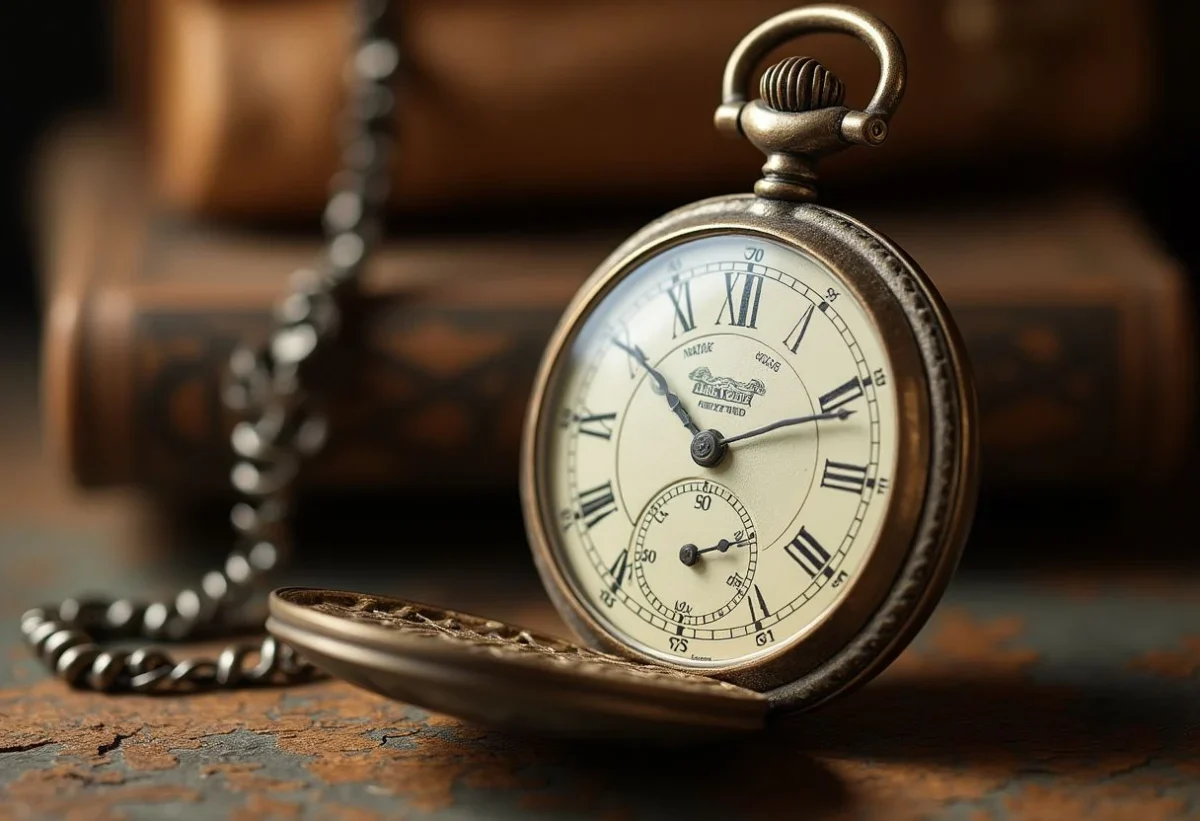
The pocket watch, often perceived as a symbol of sophistication and status, tells a fascinating story that spans the ages. Beyond its simple function of timekeeping, it carries cultural and personal significance, embodying refinement and artisanal ingenuity. From its emergence to its status as a prized collectible, the pocket watch evokes a world where time and art converge in perfect harmony.
Origins and Evolution of the Pocket Watch
The journey of the pocket watch begins in the 16th century, at a time when watchmaking was undergoing a revolution. It was much more than an accessory, marking the emergence of precision and prestige in the world of time.
The first pocket watches, developed in Europe, were true masterpieces of craftsmanship. Their design allowed them to be carried in the pockets of jackets, hence their name. These watches were often adorned with intricate engravings, signifying the wealth and elegance of their owners. Over time, their mechanism became more complex, incorporating innovations such as minute repeaters and tourbillons, reflecting the technical mastery of watchmakers.
In the 19th century, the pocket watch became an essential symbol of men’s fashion. Worn by gentlemen and aristocrats, it became a sign of good taste and social stature. The development of specific chains for carrying them ensured a prominent place for the pocket watch in everyday attire.
The Different Types of Pocket Watches
Although sharing a common function, pocket watches come in several styles, each with its own distinctive characteristics that appeal to watch enthusiasts.
- Classic pocket watch: Featuring a no-frills case, it emphasizes simplicity and elegance. Its dials are generally adorned with Roman numerals, adding a touch of timeless refinement.
- Skeleton pocket watch: Highly prized for its captivating aesthetic, it reveals the internal mechanism through a transparent dial, allowing one to admire the ballet of gears.
- Hunter pocket watch: Identifiable by its protective cover, it shields the dial from scratches and impacts. It is often favored by those looking to preserve their watch in less forgiving environments.
- Complicated pocket watch: Incorporating additional functions such as a calendar, moon phase, or chronograph, it is a testament to horological innovation.
How to Maintain a Pocket Watch
The longevity of these precious objects depends on the attention and care they receive. Understanding how to maintain them is essential to keep them in perfect condition and pass them on to future generations.
Regular maintenance involves gently cleaning the case, using a soft cloth to remove fingerprints and dust. It is also important to ensure that the mechanism is lubricated by a professional every two to three years, guaranteeing smooth and precise operation. When not worn, it is advisable to store the pocket watch in a dry environment, protected from humidity that could damage the internal components.
Handling a pocket watch with care avoids shocks that could affect the accuracy of the movement.
Finally, never force the crown when winding, as this could damage the mainspring, ensuring that the legacy of watchmaking is preserved for future generations.
The Pocket Watch Today: Style Accessory and Collectible
In a world dominated by smartwatches and other digital gadgets, the pocket watch has not lost its charm. It continues to captivate and allure, both for its aesthetic and its history.
Collectors often seek vintage pocket watches, rare and precious pieces that testify to the watchmaking art of yesteryear. These watches become investments, their value increasing over time.
For others, the pocket watch is a fashion accessory, adding a touch of vintage and class to a contemporary outfit. Appreciated for its ability to transcend eras, it is worn by those who wish to showcase their taste for traditional refinement.
History and fashion enthusiasts know that a pocket watch is much more than just a timekeeping tool; it is a statement of style and a testament to past eras. Whether worn daily or preserved in a collection, it remains a timeless symbol of beauty and tradition.