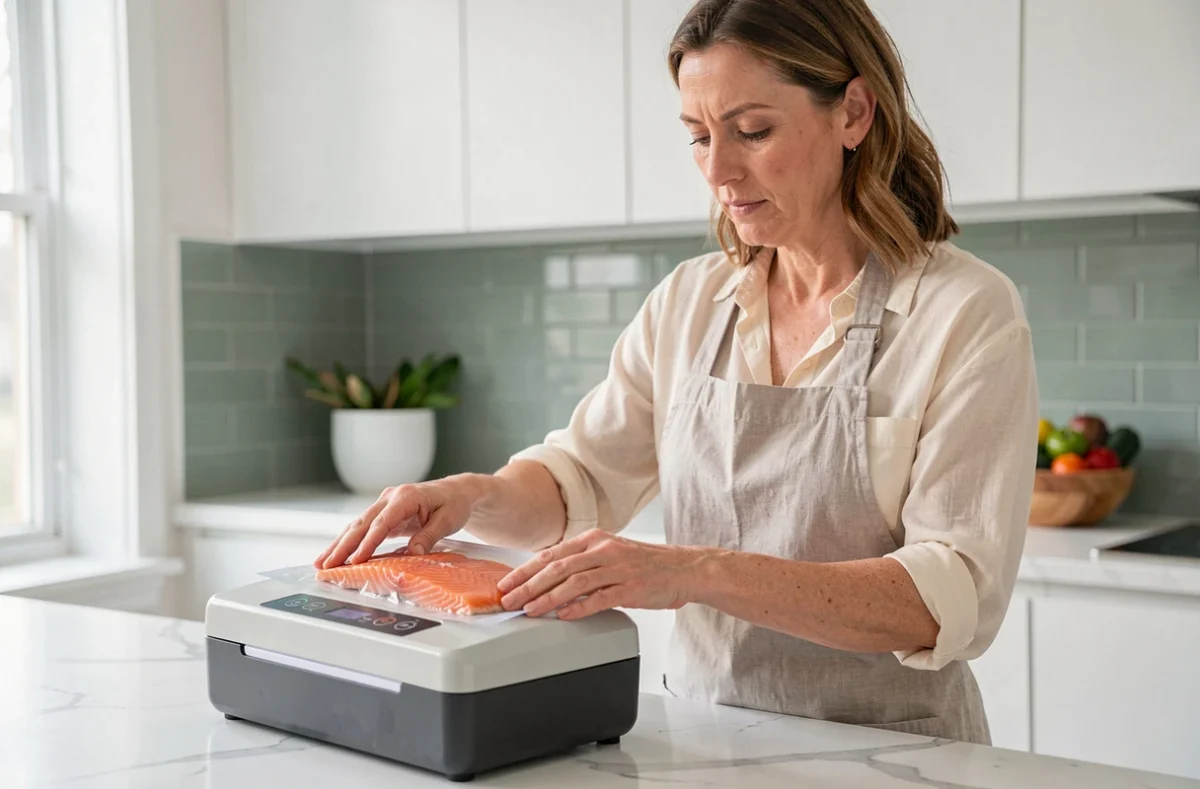
The market for domestic vacuum machines has become denser in recent years, with devices ranging from a few dozen euros to several hundred. The promises are similar (extended preservation, waste reduction, sous-vide cooking), but actual performance varies significantly from model to model. Before choosing, it’s essential to understand what these devices actually do, and especially what they do not do.
External suction or chamber machine: two technologies with distinct uses
The majority of comparisons rank vacuum machines by price range or brand. However, the most structuring criterion remains the type of suction technology. Two families coexist in the domestic market, and they do not meet the same needs.
External suction devices (also called “seal bar” machines) suck air directly from the opening of the bag. They work exclusively with embossed bags, whose textured surface allows air to circulate toward the suction nozzle. These models represent the overwhelming majority of machines sold for domestic use.
Chamber machines, on the other hand, place the entire bag in a sealed chamber. Air is extracted from the chamber, creating a uniform vacuum around the food. This process allows for packaging liquids without unwanted suction, a recurring weak point of external suction models. In return, chamber machines are bulkier, heavier, and significantly more expensive.
A comparison of the best vacuum machines allows for a quick visualization of the performance differences between these two categories, particularly regarding vacuum retention over time.
Reliability after warranty: the missing criterion in product sheets
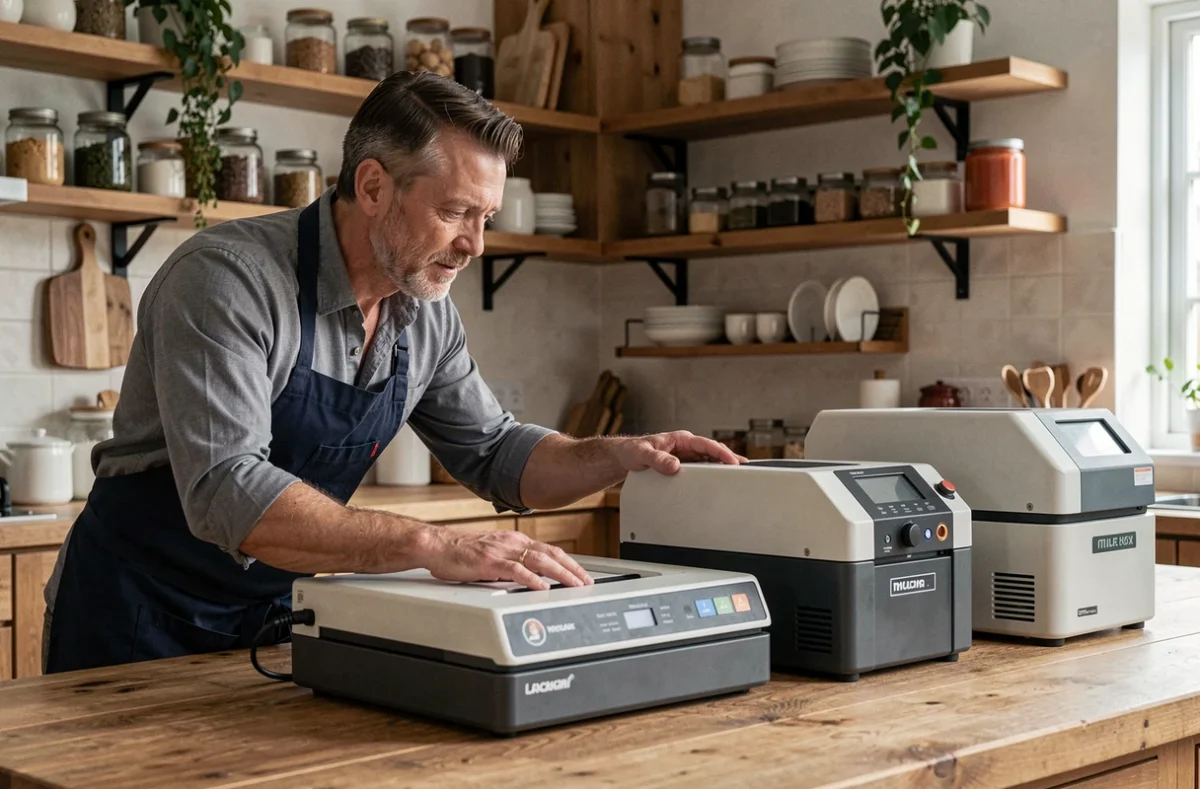
Manufacturer data highlights power (measured in watts), suction flow rate (in liters per minute), and sealing width. These indicators provide an idea of theoretical potential, but they say nothing about the actual durability of the motor and pump.
User feedback published on Reddit in September 2026 reports recurring breakdowns on certain models after about a year of use, including on well-known brands like Anova. Other users report several years of trouble-free operation with less expensive devices. These testimonials do not constitute a statistical test, but they reveal a blind spot in typical comparisons.
The most frequently reported defects include:
- Irregular seals that compromise the airtightness of the bag and cause a gradual loss of vacuum
- Moisture drawn into the pump when packaging wet products (marinated meats, blanched vegetables), which accelerates internal wear
- Loss of vacuum observed after 24 to 48 hours of storage, indicating insufficient sealing or poor-quality bags
A relevant testing protocol should therefore include a check of vacuum retention after 24 and 48 hours, on both dry and wet products. Few consumer comparisons incorporate this type of measurement.
Vacuum bags and consumables: a cost often underestimated
The purchase price of the machine represents only part of the actual budget. Embossed bags and rolls constitute a recurring expense that many buyers discover afterward.
External suction machines require the use of embossed bags, the price per linear meter of which varies according to brand and thickness. Some manufacturers lock compatibility with their own consumables, while others accept generic rolls. This point deserves verification before purchase, as the cost difference over a year of regular use can be significant.
Chamber machines accept smooth bags, which are generally cheaper per meter. However, their initial purchase price largely offsets this savings on consumables, making them suitable for intensive use (weekly batch cooking, game preservation, preparation of sous-vide dishes in quantity).
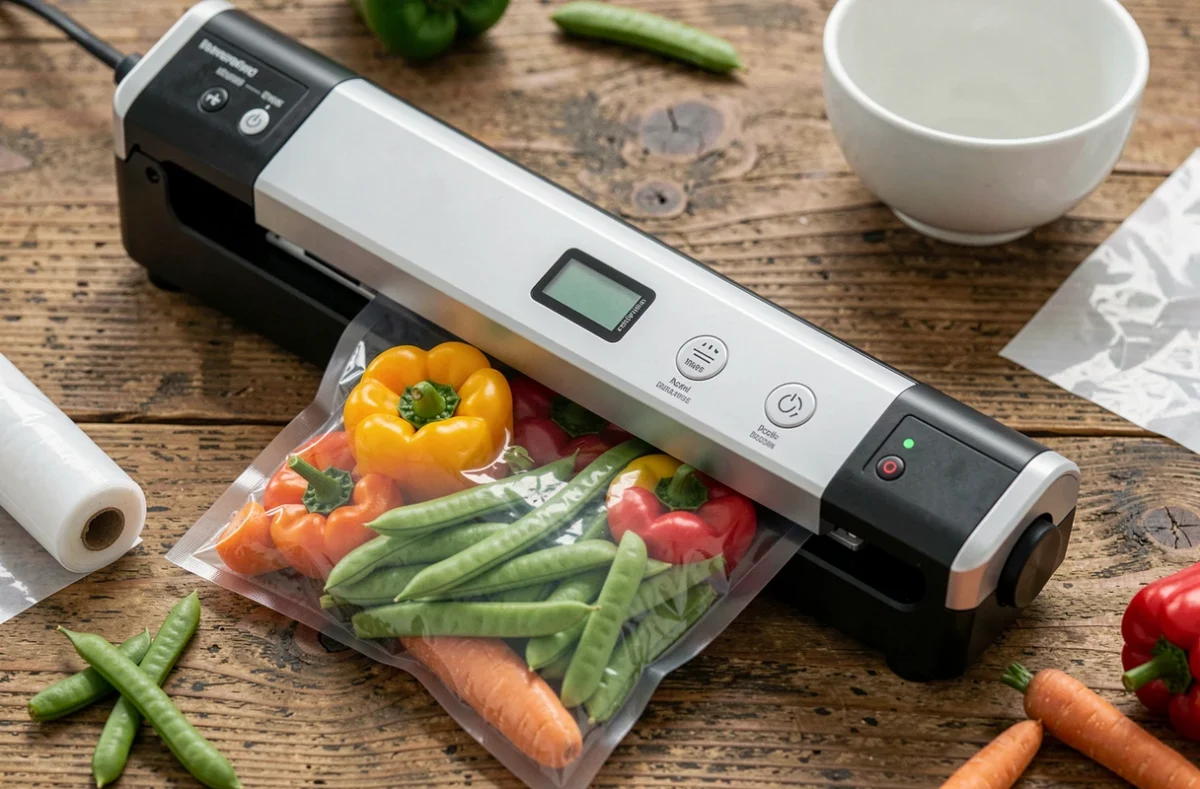
Vacuum preservation: what the technique does not guarantee
A point rarely explained in buying guides: vacuum sealing does not sterilize food and does not replace the cold chain. It slows down oxidation and limits the growth of certain aerobic bacteria, but microorganisms capable of proliferating in low-oxygen environments (anaerobes) can still survive.
There is no universal shelf life for vacuum-sealed food. This duration depends on the initial contamination of the product, the storage temperature, and the level of vacuum achieved. A steak vacuum-sealed at room temperature will not last longer than a traditionally wrapped steak in the refrigerator.
Vacuum sealing finds its full value when combined with rigorous refrigeration or freezing. Under these conditions, it effectively extends shelf life by limiting freezer burn and drying out. For sous-vide cooking (low temperature), the quality of the seal becomes crucial: a bag that loses its airtightness under heat compromises the result.
Vacuum machine for the home: the criteria that really matter
Rather than comparing abstract technical sheets, three concrete questions help frame the choice.
- The expected frequency of use: occasional use (once or twice a week) does not justify a chamber machine, but still requires a model whose pump can handle successive sessions without overheating
- The type of food being packaged: if you plan to vacuum-seal liquid or semi-liquid preparations (soups, marinades), an external suction model without a “liquid” function will pose a problem
- The total cost over two years (machine, bags, any accessories) rather than just the initial purchase price
Field feedback varies on the question of the appropriate price-quality ratio. Some entry-level models perform their function adequately for several years, while more expensive devices disappoint due to insufficient reliability. Price alone is not a reliable indicator of durability.
The choice of a domestic vacuum machine relies less on brand or advertised power than on the suitability between the type of suction, frequency of use, and consumable budget. Checking bag compatibility, liquid management, and long-term user feedback remains the safest way to avoid disappointment after a few months.