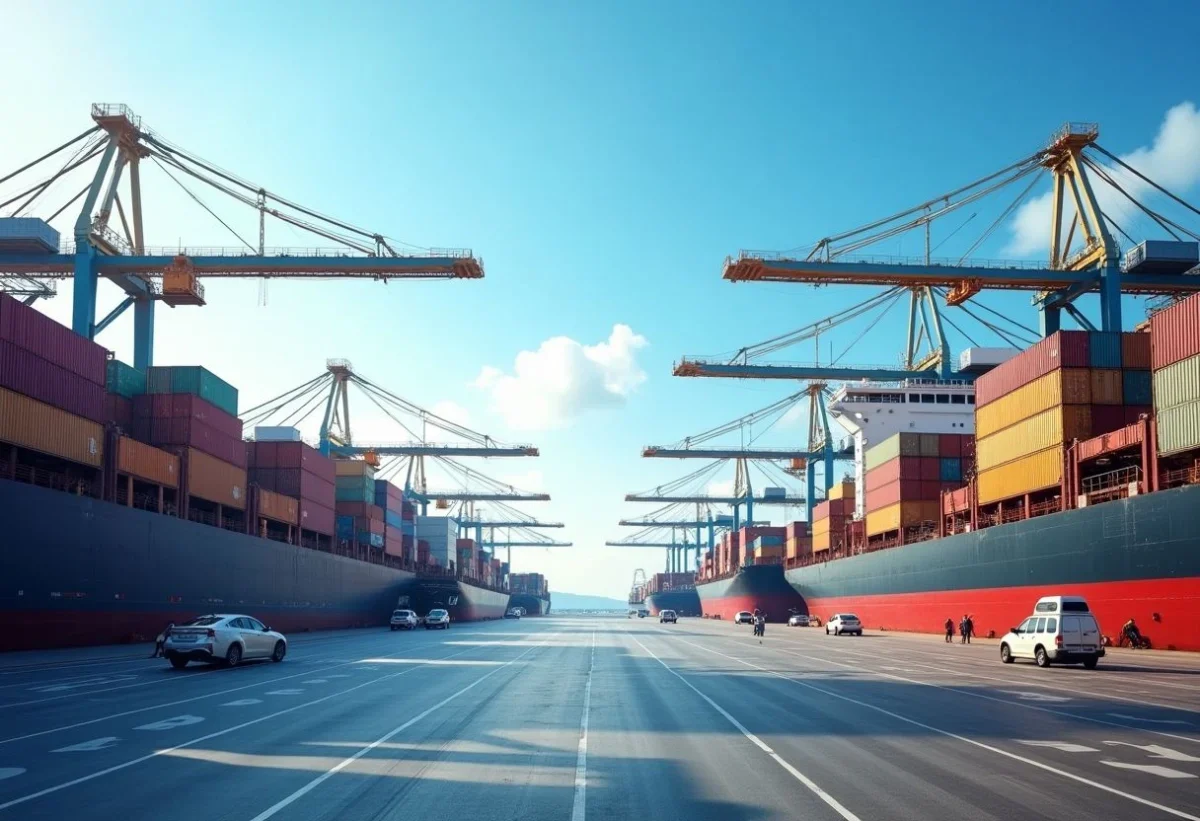
Global exchanges are intensifying, erasing borders and connecting continents. International transport, the true backbone of the global economy, is an exciting and complex universe. It enables goods to cross oceans and unite nations through sophisticated communication networks. This sector is not just about efficiency, but also about constant innovation in the face of logistical, environmental, and geopolitical challenges. Players in this industry must juggle technological developments and international regulations while being attuned to the changing needs of the global market.
Modes of International Transport
International transport relies on different modes of transport, each with its own characteristics and specific advantages, addressing the varied needs of goods exchanges around the world.
- Maritime Transport: Dominating global trade, it represents an economical means for transporting large quantities of goods. Thanks to increasingly larger container ships, costs per unit transported are reduced, allowing for efficient movement between continents.
- Aerial Transport: Ideal for lightweight and high-value goods, it ensures speed and reliability. Although more expensive, it is essential for the trade of perishable and urgent products.
- Rail Transport: Mainly used on continents, it offers a sustainable solution for transporting heavy and bulky goods, reducing greenhouse gas emissions compared to other land transport modes.
- Road Transport: Flexible and efficient for short and medium-distance trips, it often complements other modes of transport to ensure door-to-door delivery.
Environmental Challenges
In a context of heightened awareness of environmental issues, international transport faces significant challenges, requiring innovative and sustainable solutions.
Reducing CO2 emissions has become an unavoidable priority. Transport companies are exploring clean technologies, such as alternative fuels and route optimization, to minimize their carbon footprint. The adoption of stricter international standards, such as those imposed by the International Maritime Organization, is pushing the industry to rethink its practices.
Moreover, maritime transport must also manage risks related to ocean pollution from hydrocarbons and other hazardous substances transported by ships. Efforts are underway to develop safer and more efficient ballast systems to protect marine biodiversity.
International Regulations and Standards
International transport is subject to a rigorous regulatory framework designed to ensure the safety, security, and efficiency of global exchanges.
- Safety Regulations: International regulations, such as those established by the International Civil Aviation Organization and the International Maritime Organization, govern the safety of transport means, imposing strict standards for vehicles, crews, and infrastructures.
- Customs Standards: Agreements such as the WTO Trade Facilitation Agreement aim to simplify and harmonize customs procedures, thereby reducing delays and costs associated with the cross-border passage of goods.
- Environmental Regulations: These include restrictions on pollutant emissions and the obligation to use greener transport technologies as part of global initiatives to combat climate change.
Revolutionary Technologies
The international transport sector is evolving thanks to the introduction of revolutionary technologies that redefine traditional methods and improve logistical efficiency.
Traceability technologies, such as advanced GPS systems and data analysis tools, allow for real-time tracking of goods, providing increased transparency and facilitating supply chain management. The integration of artificial intelligence and automation into transport processes also helps optimize operations, reducing costs and increasing efficiency.
Furthermore, the emergence of high-speed communication networks, such as 5G, enables the interconnection of transport systems, creating an intelligent ecosystem for managing goods flows.
Finally, advancements in the field of autonomous vehicles and drones promise to transform the landscape of international transport, offering fast and economical solutions for the delivery of goods.