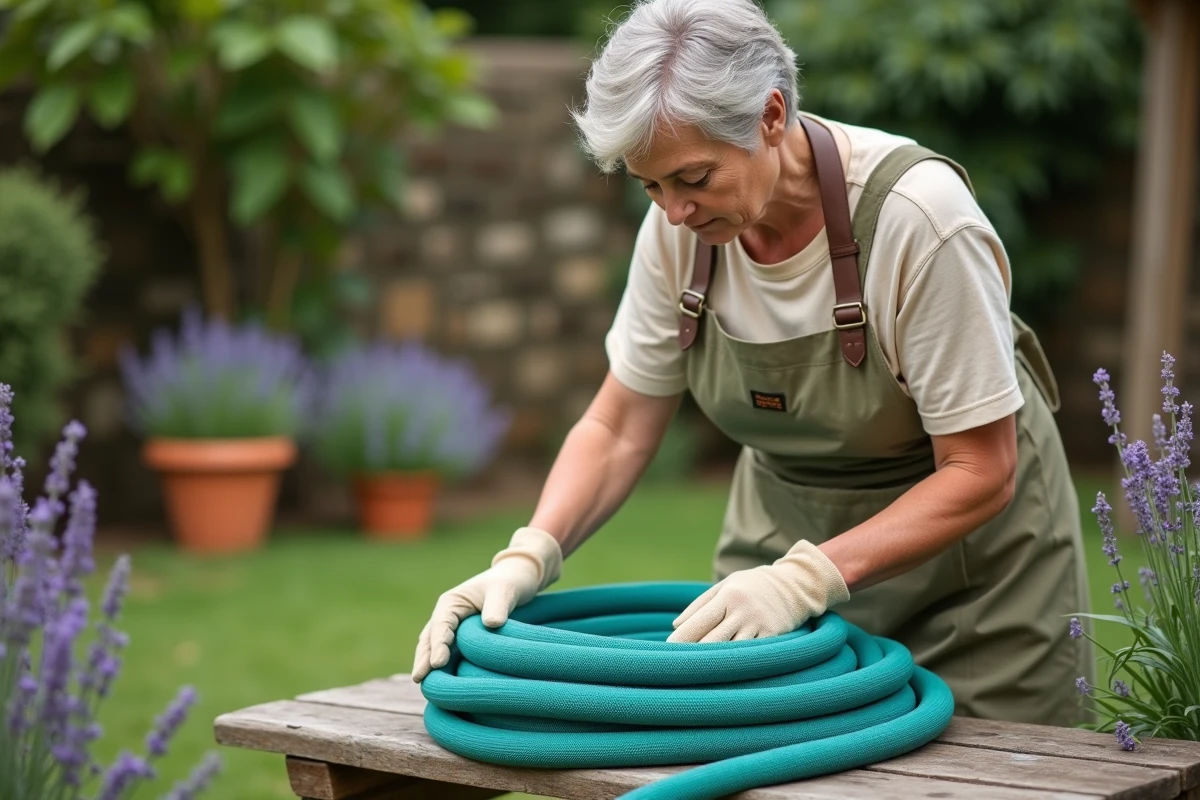
An expandable hose left in the sun after watering the vegetable garden, still swollen with water, eventually deforms within a few weeks. Its double-walled structure (latex core, external textile sheath) reacts poorly to stagnant water, bends, and prolonged UV exposure. Maintaining and storing an expandable hose requires precise actions, different from those applied to a traditional PVC hose.
Chemicals and expandable hoses: an underestimated risk
The expandable hose is often used to rinse the terrace after cleaning with detergent or to dilute chlorine around the pool. This reflex damages the sheath faster than one might think.
Comparative tests by the German magazine Stiftung Warentest (n° 08/2023) show that expandable hoses lose their elasticity faster when in contact with detergents and chlorine than traditional PVC hoses. The inner latex and outer fabric stiffen, leading to irregular swelling and then cracks.
The solution is simple: after any use involving a treatment product (terrace cleaner, chlorinated water), run clear water through the hose for one to two minutes before emptying it. This systematic rinsing removes chemical residues trapped in the folds of the latex. We detailed this routine and other precautions in a guide on Le Jardin d’Emilie that covers the entire maintenance cycle.
Draining and drying the expandable hose after each use
Turning off the tap and letting the hose retract is not enough. Water remains trapped in the internal folds of the latex. On an exposed terrace, this water heats up and accelerates the degradation of the material.
Disconnecting the hose from the tap after each watering allows air to circulate and residual water to drain by gravity. One end is lifted, and then the hose is slid between the hands towards the other end to push out the last pockets of water.
In hot weather, avoid letting the hose dry directly in the sun: UV rays weaken the outer fabric. A shaded spot, even temporary (under a tree, against a north wall), is sufficient for about twenty minutes of drying before storage.
Storing the expandable hose: loose loops or wall reel
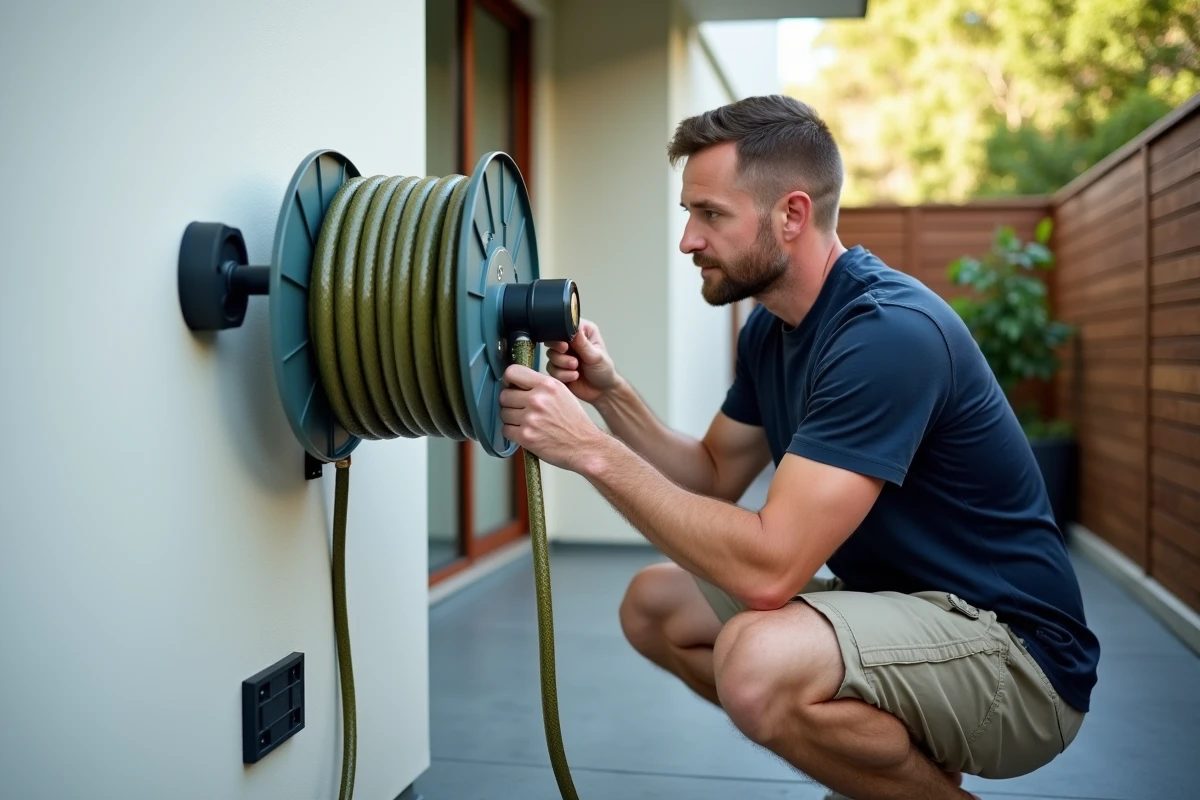
The classic reflex is to install a wall reel or a reel to tightly wind the hose. This works for a PVC hose. For an expandable one, it’s more nuanced.
Since 2023, several manufacturers (Hozelock, Gardena, Kärcher) specify in their manuals that prolonged storage under tension on a reel reduces the lifespan of the expandable sheath. The reason: the inner latex remains compressed in a fixed position, creating fatigue points. Their recommendation for storage over several weeks: loose loops, without sharp angles, in a bin or basket.
For regular use (daily garden watering in summer), the wall reel remains practical. Unroll in the morning, wind in the evening, the hose does not stay under tension long enough to suffer. Feedback varies on this point depending on the models and the quality of the latex.
Choosing between a ground basket and a wall support
- The ground basket or bin is suitable for single-level gardens: the retracted hose is placed in loose loops without bending. Easy to move, it also protects the hose from UV rays if the bin is opaque.
- The rotating wall support works well on a balcony or small space: the hose hangs freely, which limits bends. Ensure that the support does not create a sharp angle at the fixing point.
- The storage bag provided by some manufacturers (Hozelock Superhoze Pro, for example) offers protection against dust and UV rays, provided the hose is stored completely emptied and retracted.
In all cases, storing the hose away from frost and direct sunlight remains the basic rule. A garage, garden shed, or even a ventilated terrace box will do the trick.
Winter protection of the expandable hose against frost
An expandable hose that freezes with water inside bursts more easily than a rigid PVC hose. The pressure exerted by ice on the soft latex is enough to cause a rupture, even with a small volume of residual water.
Allianz France, in its prevention sheet “Protect your outdoor installations against frost” (updated 2023), explicitly recommends to drain and disconnect expandable hoses before any frost episode. This advice applies from the first cold nights, not just in the middle of winter.
The winter draining procedure consists of a few concrete steps:
- Close the outdoor tap and open the hose’s end to let the water drain completely.
- Disconnect the hose from the tap and fittings, then lift it in sections to expel residual water.
- Store the retracted hose in a frost-free place (garage, cellar, laundry room), in loose loops without bending.
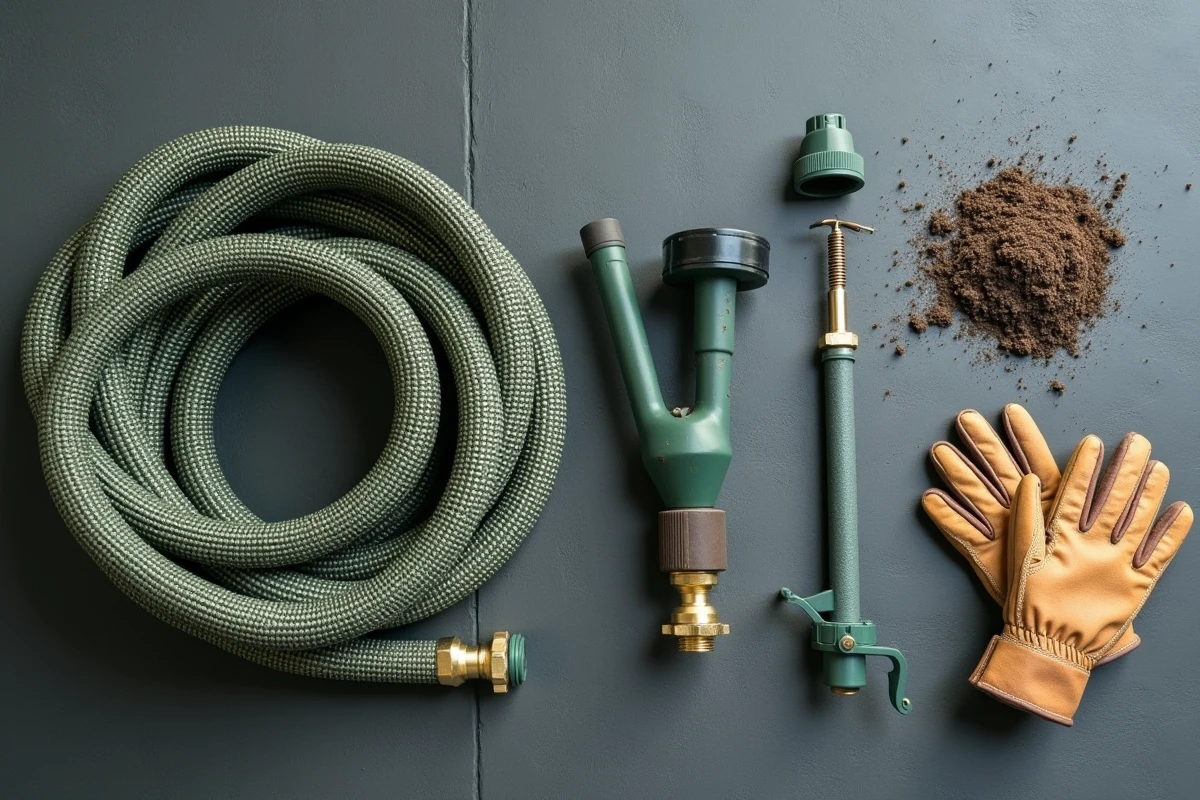
- Check brass or plastic fittings: frost can also crack connectors, not just the hose itself.
Fittings and accessories: fragile points to monitor
The fittings of an expandable hose endure more mechanical stress than those of a traditional hose due to variations in length and pressure with each use. Inspect the O-rings at least once per season. A hardened or flattened ring causes leaks at the tap or nozzle.
Replacing an O-ring costs a few cents and prevents having to buy a complete hose. Most brands (Hozelock, Gardena) sell O-ring kits compatible with their expandable ranges.
A well-maintained expandable garden hose lasts several seasons without loss of pressure or cracking. The key actions can be summed up in three words: empty, dry, protect. The rest is logical storage and a regular check on the fittings before reconnecting in spring.