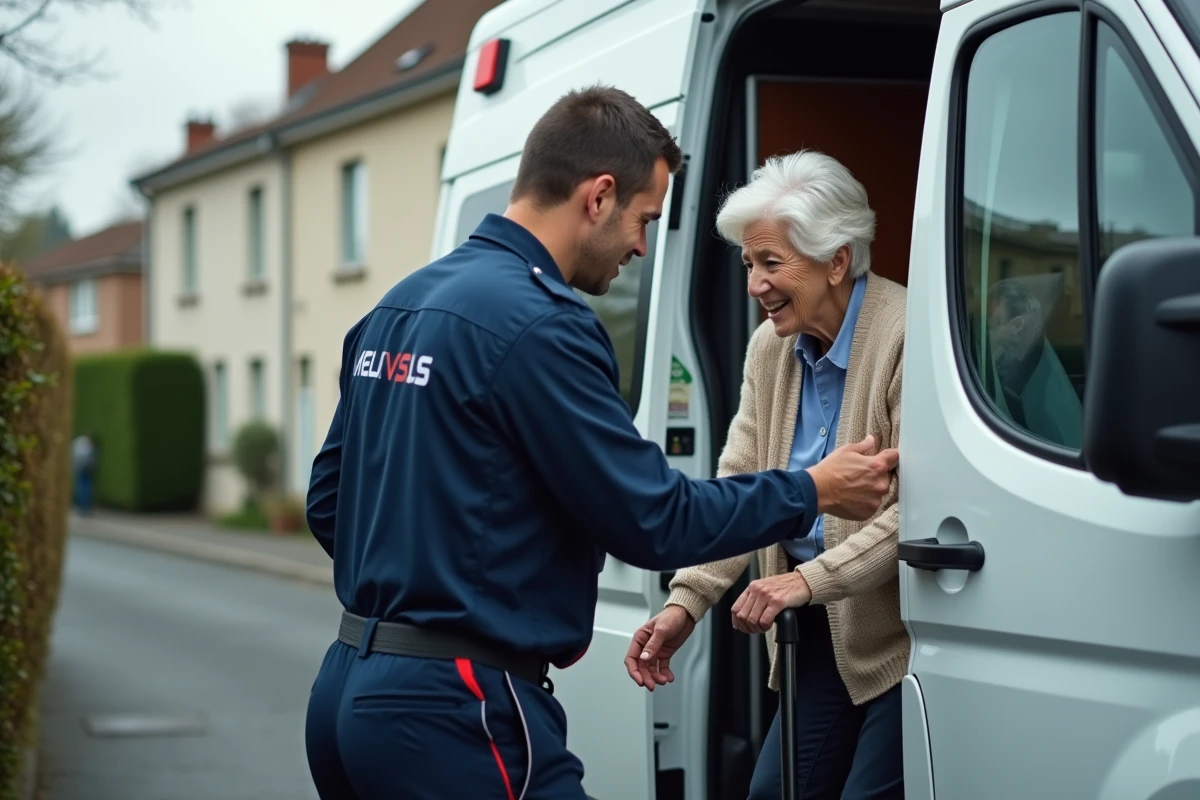
The reimbursement of medical transport costs by Health Insurance follows specific rules, which vary depending on the reason for the trip, the mode of transport chosen, and the patient’s place of residence. Between prior medical prescription, agreement from the CPAM, and choice of the appropriate vehicle, the conditions for accessing the VSL deserve detailed examination, especially for patients far from care centers.
Rural areas and interregional VSL: the proximity limits that complicate access
A patient residing in a rural area and linked to a care center located in another region faces a rarely documented constraint: the proximity rule. Health Insurance prioritizes reimbursement for transport to the nearest appropriate facility from the patient’s home. When the specialist or required technical platform is located several dozen kilometers away, in another department or even another region, the reimbursement for the VSL trip is not automatic.
For beneficiaries of the CMU-C (now called Complementary Health Solidarity), this constraint weighs even more heavily. Full third-party payment avoids upfront costs, but only if the transport complies with the coverage framework. An interregional trip to a distant CHU, even if medically justified, may be denied reimbursement if the CPAM believes that a closer facility could provide the same care.
In practice, to secure coverage for an interregional transport, there is a lever: prior agreement. The prescribing physician must then justify in the medical transport prescription that the care cannot be provided locally. Understanding the right to ambulance transport VSL requires knowledge of this mechanism, as without this agreement, the patient bears the additional mileage cost.
Medical transport prescription: who prescribes and in what cases
The medical transport prescription (PMT) is the document that conditions any coverage. Without it, no reimbursement is possible, regardless of the mode of transport used.
Situations qualifying for the PMT
- A long-term condition (ALD) requiring regular care: dialysis, chemotherapy, radiotherapy, or repeated hospitalization. Patients with ALD benefit from 100% coverage for transport related to their condition.
- A hospitalization (admission or discharge), including day hospitalization, when the patient’s condition does not allow for independent travel.
- A work accident or occupational disease, with full coverage of transport costs.
- A summons by the medical service of Health Insurance or by a medical equipment supplier.
- A long-distance transport (more than 150 km one way) or in series (at least four transports of more than 50 km over two months), which require prior agreement from the CPAM.
Who writes the prescription
The attending physician, the hospital physician, or any physician involved in the care pathway can issue the PMT. The document specifies the mode of transport suitable for the patient’s condition: personal vehicle, public transport, contracted taxi, VSL, or ambulance. The choice of transport mode is up to the physician, not the patient or the transporter.
VSL, ambulance, and contracted taxi: comparative table of conditions
The physician prescribes the mode of transport based on the patient’s autonomy and medical situation. Here are the criteria that distinguish the three main reimbursable modes of medical transport.
| Criterion | VSL | Ambulance | Contracted Taxi |
|---|---|---|---|
| Patient position | Sitting | Supine or semi-sitting | Sitting |
| Medical supervision during the trip | No (accompaniment by an ambulance auxiliary) | Yes (crew of two people, one of whom is a state-certified professional) | No |
| Main usage case | Regular care, specialized consultations, hospital discharge without major impairment | Patient requiring a supine position, continuous monitoring, or oxygen therapy | Autonomous patient, area not covered by a VSL |
| Health Insurance coverage (general case) | 65% | 65% | 65% |
| Coverage in ALD, AT/MP | 100% | 100% | 100% |
| Shared transport possible | Yes | No | No |
Shared transport in VSL helps reduce costs for Health Insurance and can be offered when several patients undertake a similar trip. The patient cannot refuse shared transport without a justified medical reason, under penalty of seeing their coverage reduced.
Prior agreement from the CPAM: the trips that require it
The majority of prescribed medical transports do not require any additional formalities beyond the PMT. However, two configurations require prior agreement from the medical service of the CPAM before the trip.
The first case concerns long-distance transports, beyond 150 km one way. The second pertains to series transports: four or more trips of over 50 km within a two-month period for the same treatment. In these two situations, the physician submits the request to the CPAM, which has a deadline to respond. Lack of response within the allotted time constitutes acceptance.
For patients in rural areas who need to consult a distant specialist, the request for prior agreement is the only reliable way to avoid a subsequent reimbursement denial. The prescribing physician must clearly indicate that local coverage is impossible, specifying the required specialty or technical platform.

Reimbursement and deductible: what remains the patient’s responsibility
Outside of ALD and work accidents, Health Insurance reimburses 65% of the contracted rate for transport in VSL, ambulance, or contracted taxi. The remainder is covered by complementary health insurance if the contract allows it.
A medical deductible applies to each trip. This flat-rate participation is capped annually. Beneficiaries of Complementary Health Solidarity (formerly CMU-C) are exempt from this, as are pregnant women from the sixth month of pregnancy and patients in ALD for transports related to their condition.
The financial coverage also depends on compliance with the prescription: a patient who chooses an ambulance when the physician prescribed a VSL risks a refusal of reimbursement for the cost difference. The prescribed mode of transport determines the amount reimbursed.
Obtaining coverage for medical transport relies on three elements: a valid medical prescription, adherence to the prescribed mode of transport, and, for long-distance or series trips, prior agreement from the CPAM. Patients far from care centers should anticipate the request for prior agreement with their physician to avoid any unexpected out-of-pocket expenses.