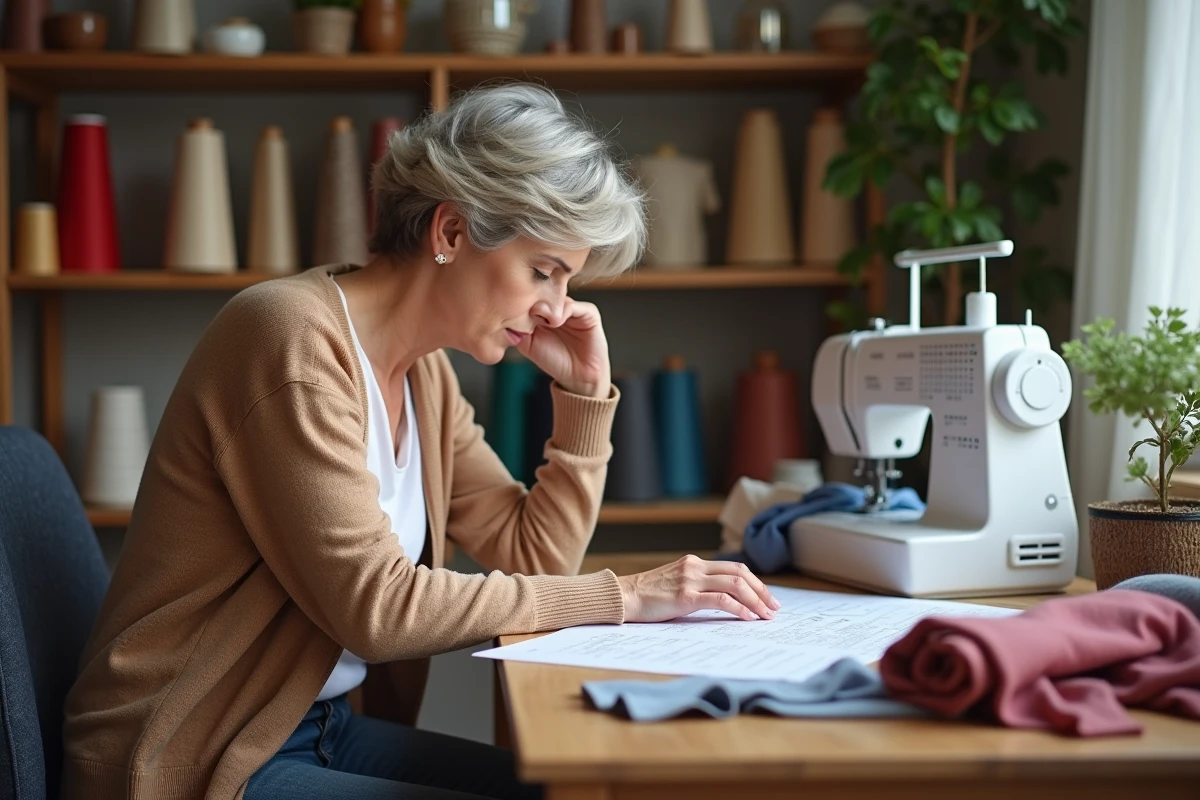
An entry-level model can display a price higher than a professional machine on sale, creating frequent confusion at the time of purchase. Some historic brands maintain their reputation despite faster innovations from new entrants. Advanced features do not always guarantee a better experience, especially for simple projects or occasional users. The real differences between models often lie in technical details that manufacturers do not highlight. In the face of the diversity of offerings in 2024, selecting a suitable machine no longer relies solely on brand prestige or the number of available features.
What to know before choosing your sewing machine in 2026
Before settling on a model, it’s better to clearly define what you expect from your future sewing machine. Look for consistency between your projects and the features offered: an attractive casing or an enticing promotion will never replace technical adequacy. Mechanical machines retain the advantage of reliability and simplicity, while electronic models expand the range of possibilities, multiplying stitch types, automating thread management, and adapting to different fabrics.
Choosing is not about giving in to a crush: power, execution speed, and the ability to work with thick or delicate materials are what matter. The best sewing machine brands now offer threading systems that simplify life, a bobbin designed to limit errors, and ergonomics that save time. Focus on the features that will truly be useful to you.
Here are some concrete elements to examine when purchasing:
- Number and variety of stitch types
- Availability of accessories, type of needle and presser foot
- Quality of after-sales service, access to spare parts
- Relationship between the price of the sewing machine and the technology included
Comparing models pragmatically ensures you find a machine that will keep up with the evolution of your practice and the diversity of your fabrics. The goal: to avoid compromises and support your creativity, regardless of your level or ambitions.
Which brands and models stand out this year?
The 2024 market highlights a few sewing machines that clearly stand out, both in terms of robustness and technical intelligence. The references that are making waves combine a solid chassis, consistent stitches, and intuitive handling. Their maintenance is not a headache, and the ease of use is felt from the first attempts.
Among the most appreciated features are the automatic needle threader, precise thread tension management, and one-step buttonholes. Today, it’s ergonomics that makes the difference: a well-thought-out machine allows for effortless transitions from thick denim to delicate chiffon, thanks to suitable power and execution speeds that sometimes exceed 800 stitches per minute.
The criteria to scrutinize for finding a machine that meets expectations are clear:
- Versatility: ability to handle different fabrics, from thick cotton to fine silk.
- Included presser feet: diversity of accessories for buttonholes, closures, or topstitching.
- Easy reading of settings, whether via a screen or precise dials.
The price remains a factor in the choice, but it should be assessed in light of the features offered. Some models manage to combine innovation, simplicity, and controlled pricing. Don’t forget to check the machine’s stability, noise level, availability of spare parts, and the quality of technical support. Today, a remarkable machine is no longer limited to assembling fabric: it supports every idea, every desire, at your pace and according to your requirements.
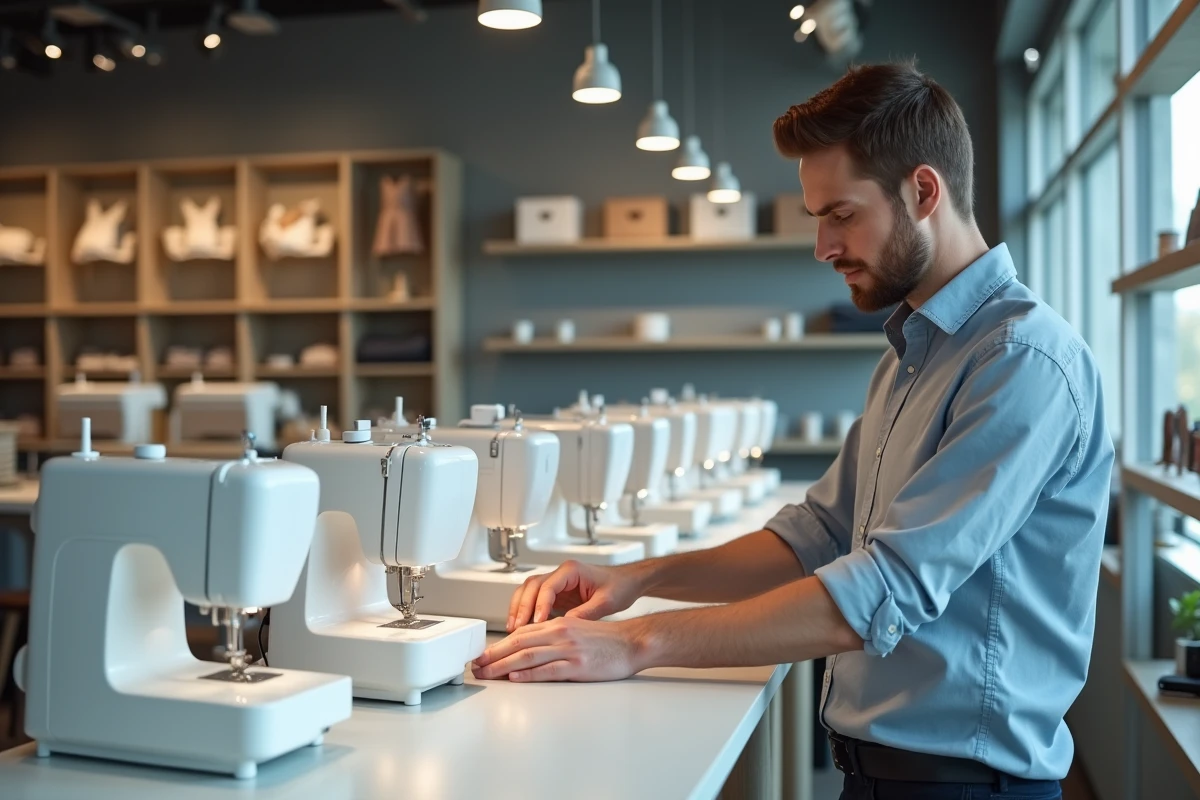
Practical tips for comparing and finding the ideal machine for your level
Whether you are a beginner or sewing is already an established passion, there is a machine suited to your profile. First of all, ask yourself about the actual use: occasional sewing, regular creations, or larger projects?
Mastering the main technical characteristics will help you make an informed choice. If you are discovering sewing, opt for a simple mechanical machine: basic stitches, intuitive settings, clear instructions. More sophisticated electronic models offer a wide variety of stitches, precise adjustments for thread tension and needle position, as well as accessories designed to adapt to all fabrics.
Be sure to check these concrete aspects when comparing:
- Quality and diversity of accessories: presser feet, bobbins, additional needles.
- Stability and consistency of the feed, especially on multiple layers of fabric.
- Ease of changing thread and needle, as well as the variety of stitches offered.
The choice of machine also depends on the level of service offered: availability of spare parts, efficiency of customer service, clarity of advice. In France, sewing remains a living craft, so prioritize brands that guarantee reliable technical support. Mechanical machines appeal with their sturdiness and longevity, while electronic models cater to the search for speed and versatility. Finding the right machine means choosing a partner that will follow your progress and bring your ideas to life. Today, sewing awaits only your impulse to reveal its full potential.