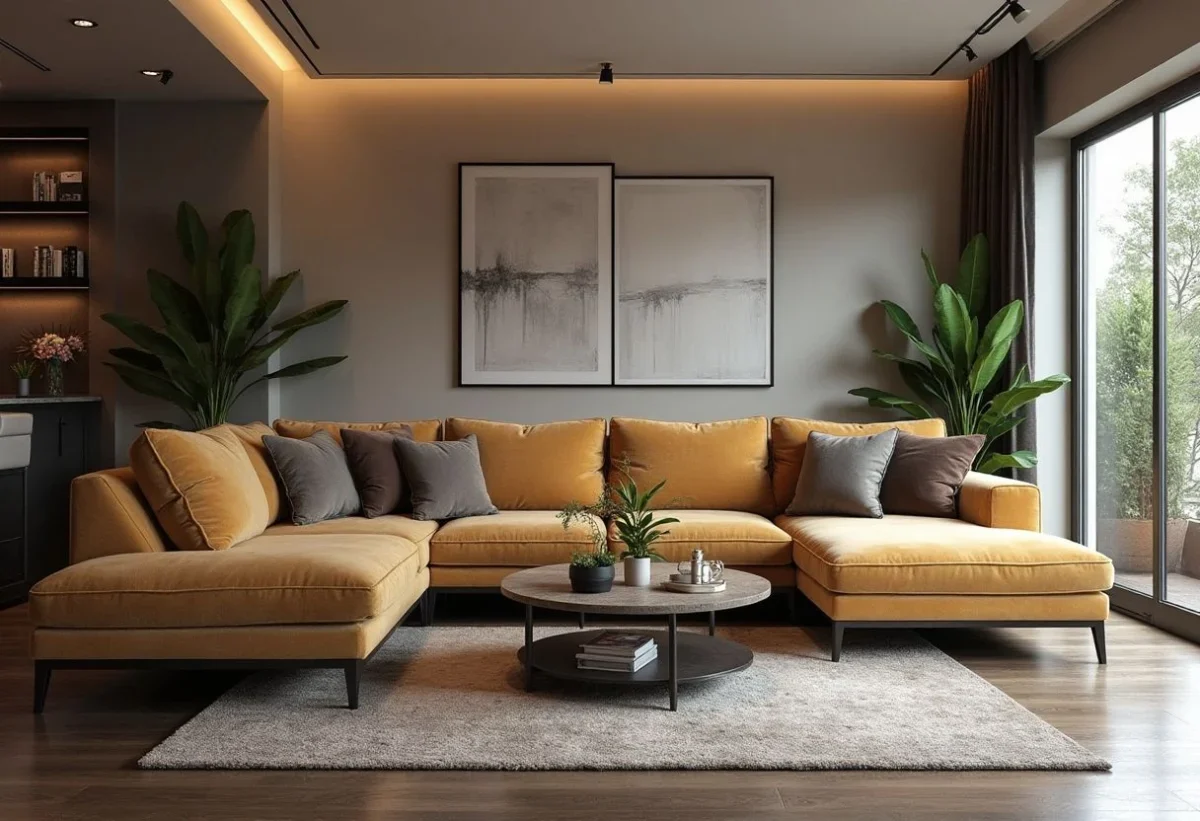
As a symbol of comfort and conviviality, the sofa has established itself in our interiors as an essential piece of furniture, synonymous with relaxation and sharing. In living rooms where it often occupies a central place, it embodies both a functional element and a symbol of style. Its history dates back several centuries, and it has evolved over time, adapting to the changing needs and aesthetic tastes of societies.
The Historical Origins of the Sofa
The earliest traces of the sofa take us back to ancient times when Greek and Roman civilizations used upholstered benches to recline during banquets. These ancestors of the modern sofa were not yet designed for the comfort we know today, but they laid the groundwork for the furniture as we know it now.
- In the Middle Ages, the sofa transformed into a cushioned bench, often equipped with pillows, reserved for the nobility in grand estates.
- During the Renaissance, art and interior decoration evolved, and the sofa became a decorative art object, often adorned with embroidery and precious fabrics.
- It was not until the 18th century that the sofa began to democratize, thanks to industrialization which allowed for mass production and, consequently, greater accessibility to the public.
Modern Comfort and Innovations
With the advent of the industrial revolution, the sofa underwent a major transformation, both in its design and in the materials used. Comfort became a priority for manufacturers who invested in researching new technologies to improve the ergonomics and durability of products.
Innovations in materials, such as high-resilience foams and pocket springs, provide optimal support while ensuring increased longevity. Designs also evolved to incorporate modern functionalities, such as sofa beds and modular models, which cater to the needs of contemporary living spaces that are often more limited.
At the same time, the fabric used plays a crucial role in the perception of comfort. The choice of upholstery affects not only the aesthetics but also the seating experience. If you are curious to learn more about choosing the ideal upholstery for your sofa, you can explore options that harmonize with your interior while optimizing comfort.
Eclectic Styles for Every Taste
The styles of current sofas are as diverse as the individuals who choose them, reflecting a wide range of tastes, preferences, and trends. Different eras have left their mark on design, creating a range of choices that extend well beyond simple functional considerations.
- The Scandinavian style, for example, is favored for its clean minimalism and soft hues, while the Chesterfield style appeals with its timeless look and elegant tufting.
- For those who prefer a more contemporary look, sofas with geometric lines and bold colors bring a modern and dynamic touch to any space.
- On the other hand, vintage enthusiasts are not left out with retro pieces that evoke an irresistible charm of yesteryear.
The Ecological Impact and New Trends
In an era where sustainability and environmental respect are growing concerns, the sofa is not exempt from this trend. Manufacturers are investing in eco-friendly materials and responsible manufacturing processes to meet the increasing demand for environmentally friendly products.
Consumers are becoming more aware of the impact of their purchases and favor renewable or recycled materials. Options that combine aesthetics and environmental respect are starting to dominate the market, influencing not only the design of sofas but also their life cycle and recyclability.
Designers are innovating with modular concepts that facilitate maintenance and replacement of individual components, thereby extending the lifespan of furniture and reducing waste.
In a constantly evolving world, the sofa continues to reinvent itself, blending comfort, aesthetics, and ecological awareness. Its adaptability makes it a faithful reflection of the values and needs of each generation. An everyday object, it remains a central pillar of our homes.