
Let’s immerse ourselves in the rich and fascinating world of Islamic traditions. One element in particular captures our attention: the ring, a universal symbol of marital union. In this culture, this ring of precious metal takes on a deep and specific meaning. But who is the instigator? Is it a custom rooted in sacred texts or rather an external influence? It is this intrigue that we aim to elucidate by deciphering the origin and symbolism of the ring in Islamic tradition. This will allow us to better understand this rich and complex culture.
Symbolic Heritage of Rings in Islam
In the realm of Islamic tradition, rings have been subject to various interpretations over the centuries. The question then arises: who is responsible for this symbolic act? Is it the groom, the family, or is there a specific practice dictating who should buy Islamic rings?
The answer varies according to schools of thought and regional traditions. Some argue that it is the groom himself who should take on this financial aspect of the marriage. This represents not only a material commitment but also a tangible proof of his affection for his future wife.
Others claim that it is rather the groom’s family that should assume this financial responsibility. According to them, this is a way for the groom’s family to display their generosity and support for this new addition to their lineage.
There are also regional variations where some cultures consider that each party, both the future husband and his family, should contribute to the purchase of the rings.
It is important to note that there is no strict rule in Islam regarding who should buy the rings. The final decision rests with the individuals involved in the marriage and can be influenced by various cultural, social, or economic factors specific to each situation.
Regardless of the interpretation adopted, it is undeniable that the ring occupies a prominent place in Muslim society. It symbolizes not only the mutual commitment between spouses but also represents a bond with God and His prophet Muhammad. It is considered an act of worship towards Allah.
Today, the contemporary implications of rings in Islamic tradition go beyond their religious symbolism. They have become objects of prestige and social display. Rings adorned with precious stones or engraved with artistic patterns are sought after for their beauty and material value.
The purchase and wearing of rings in Islamic tradition carry a deep and complex meaning. Although different viewpoints exist on who should bear this financial responsibility, it is important to remember that it falls within the personal and cultural domain. In any case, the ring remains a powerful symbol that unites not only two human beings but also two spiritual beliefs within Islamic tradition.
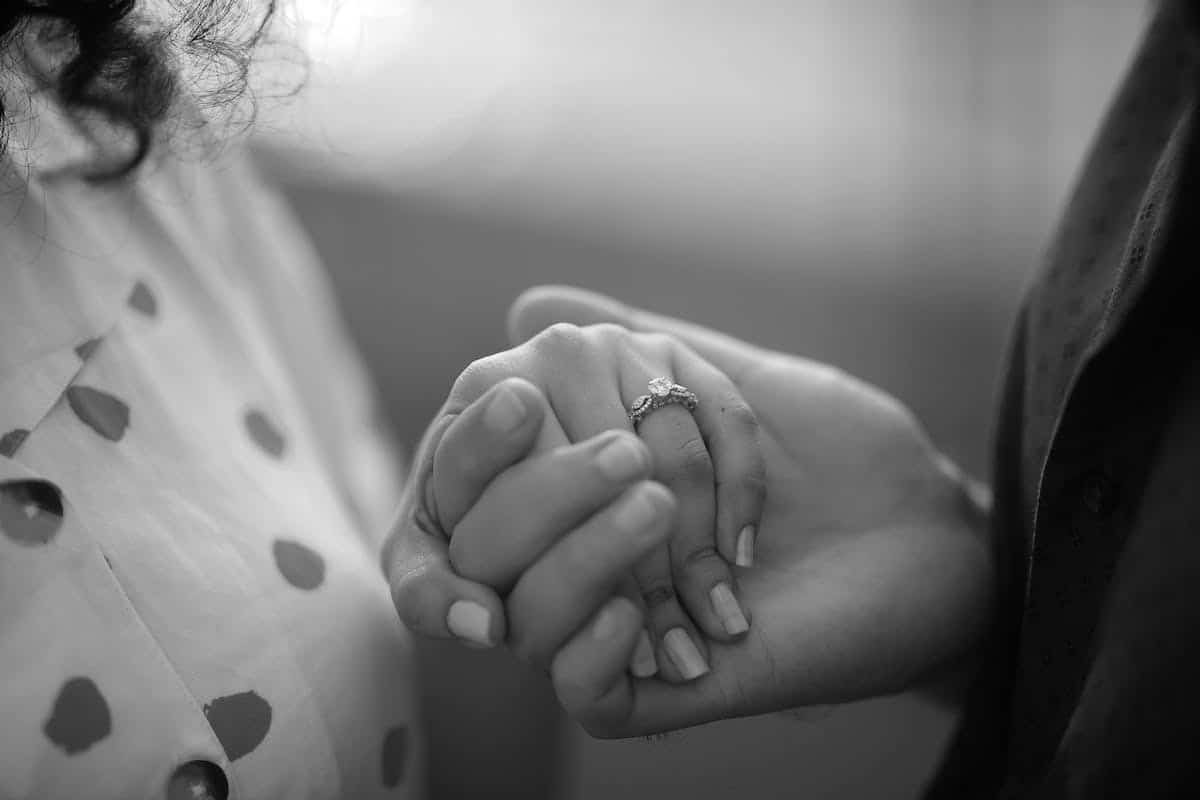
Divergent Interpretations of Rings
Beyond the question of financial responsibilities, it is essential to highlight the central role of those responsible for transmitting this symbolism within Islamic tradition. These key players play a crucial role in teaching and maintaining this tradition within Muslim communities.
The primary responsible parties are religious scholars, also known as ulemas. Their mission is to study in depth the sacred texts of the Quran and hadiths (words and actions of the prophet Muhammad) in order to interpret religious teachings. Religious scholars thus provide guidance to the faithful on all aspects of life, including marriage and its symbols.
It is through their teachings that these scholars instill in believers the spiritual and symbolic importance of rings in Islamic tradition. Their moral authority allows them to influence individual and collective behaviors regarding this specific aspect of marriage.
Families also play a crucial role in transmitting this symbolism. As social institutions, they are responsible not only for educating their members about family customs but also about those specific to their religion.
From a young age, within the family home, children learn about the importance placed on rings in Islamic tradition. For example, when a close family member gets married, parents may explain to their children the deep meaning and significance of this symbol.
The responsibility for transmitting this symbolism is not limited to family and religious circles. Media, including television channels, specialized websites, and social networks, also play an important role in disseminating Islamic traditions in general.
Through educational programs, articles, or explanatory videos, they contribute to raising public awareness about the symbolism of rings and their importance in Muslim marriage. They create a collective consciousness that further anchors these traditional values within society.
It should be recognized that the responsibility for transmitting this symbolism in Islamic tradition is multifaceted. From religious scholars to families and media, each plays a crucial role in preserving this millennia-old tradition. Through their teaching and influence on the public, they contribute to perpetuating the spiritual and cultural significance of rings in Muslim marriage.
Transmission of Symbolism: Who is Responsible
In Muslim society, rings hold paramount importance. They are much more than a simple ornament or wedding jewelry; they symbolize the sacred union between two individuals and their respective families.
Within Islamic tradition, marriage is considered a spiritual contract sealed before God. The ring is the visible witness to this solemn commitment. Its precious nature reminds spouses of their mutual responsibility and commitment to their partner throughout their shared life.
The ring in Muslim society is not limited to its material value, but also encompasses emotional and symbolic dimensions deeply rooted in religious culture. It represents love, trust, mutual respect, and commitment to the moral and spiritual values shared by the spouses.
The ring has an important social dimension in Muslim society. It allows individuals to publicly display their marital status and clearly indicates to other community members that these individuals are now bound by the ties of marriage.
Importance of Rings in Muslim Society
In contemporary society, rings play a key role in expressing identity and religious values. They transcend cultural and geographical boundaries, allowing Muslims around the world to show their belonging to a global community. Rings thus become the symbol of a shared identity among individuals belonging to Islamic tradition.
Today, these wedding jewels have also evolved to adapt to modernist trends. A variety of rings can be found that skillfully combine ancient traditions and contemporary styles. Additionally, many couples opt for unique designs, showcasing their individuality while respecting the aesthetic codes inherent to Islamic tradition.
Despite this aesthetic evolution, the ring retains its timeless essence: that of a sacred bond between two people engaged in a marital relationship based on love, trust, and mutual support. It thus remains a powerful symbol of family solidarity within the Muslim community.
However, it is important to consider the considerable expenses associated with acquiring precious jewels. This raises questions about the social pressure exerted on families or the risk it poses for those who cannot afford such excessive expenditures.
While the ring in Islamic tradition holds immense importance, it nevertheless adapts to contemporary evolutions. It remains a strong symbol of commitment and marital solidarity within the Muslim community while reflecting the spiritual and moral values associated with it.
Current Implications of Rings
The symbolism of rings in Islamic tradition continues to be perpetuated with a deep and spiritual significance. These precious jewels represent much more than a simple ornament; they are the symbol of the sacred union between two souls who commit to facing life’s challenges together.
In this age-old tradition, rings hold paramount importance as a social and religious marker. They testify to belonging to the Muslim community and strengthen family ties within a society where marriage is considered a serious and lasting commitment.
The symbolism of rings in Islamic tradition is not limited solely to heterosexual marriages but also encompasses same-sex unions. This openness reflects a gradual evolution within Muslim society to recognize all forms of love and respectful partnerships.
It is important to emphasize that each individual has their own interpretation and understanding of this sacred symbol. Aesthetic choices vary according to personal tastes, while certainly respecting a common foundation derived from religious teachings.
It is essential to avoid excessive spending on costly jewels. It is crucial to maintain the moral integrity of marriage.
The perpetuation of the symbolism of rings in Islamic tradition relies on the individual commitment of community members to uphold the moral and spiritual values associated with it. It is the duty of religious leaders, families, and even the media to educate about these traditions while encouraging open and inclusive dialogue to allow for healthy and respectful evolution within contemporary Muslim society.
Perpetuation of the Symbolism of Rings in Islam
The symbolism of rings in Islamic tradition is a field that raises many questions regarding its responsibility. Who is truly responsible for it? This complex question finds its answers in various sociocultural and religious aspects.
It should be emphasized that the symbolism of rings directly stems from the teachings of the Quran, the holy book of Islam. Marriage plays a central role in the Muslim religion and is considered a divine institution. Religious leaders have the mission to teach and guide believers on the main symbols associated with marriage, including that of rings.
Imams and other religious scholars are therefore generally perceived as responsible for transmitting this symbolism to the faithful. Their role is to explain the deep meaning behind these precious jewels so that couples understand their spiritual importance when sealing their mutual commitment.
Families also play a crucial role in transmitting this symbolism. Indeed, they are often the ones who prepare the bride’s trousseau, which includes the future wife’s ring according to their family traditions as well as regional or cultural ones.
The individual role of the people involved in an Islamic marriage should not be overlooked. The couples themselves bear a significant part of the responsibility regarding the meaning they attribute to their personal rings. They must be aware of the symbol they wear and the commitment it represents, both to their partner and to the community.
It is interesting to examine the role of the media in transmitting this symbolism. Various media outlets can influence collective perceptions by emphasizing certain aspects of Islamic marriage, including that of rings. An indirect responsibility can be attributed to the media for conveying a balanced and respectful image of this tradition.
Thus, the symbolism of rings in Islamic tradition does not rest solely on the shoulders of a single entity or individual but rather on a complex network of sociocultural and religious influences. It is a heritage that must be preserved with care while taking into account contemporary realities to maintain its deep significance within modern Muslim society.